


Welcome to SHENWEI's premium steel wire and wire rope directory. As a leading, certified manufacturer in China, Nantong Shenwei Steel Wire Rope Co., Ltd. specializes in engineering high-tensile steel wire solutions tailored for global industrial supply.
Our robust production capabilities cover a comprehensive range of products, including high-grade Galvanized, Ungalvanized, and premium corrosion-resistant Stainless Steel Wire Ropes. To meet diverse engineering needs, we offer specialized PVC/Plastic Coated wires for utility and garden applications, alongside heavy-duty lifting slings and industrial chains. Backed by our specialized production workshops and rigorous quality control, SHENWEI delivers safety, durability, and factory-direct value to partners worldwide.
Various Types
Our ropes can be of various types to suit your different needs, including ungalvanized and galvanized steel wire ropes, PVC-coated steel wire ropes, stainless steel wire ropes, and so on. It can be produced in diameters from 1mm to 60mm to meet the different needs of the market. We can also customize products according to customers' requirements.
Quality Assurance
Our production line utilizes the latest technology and equipment to ensure that our products meet the highest quality standards. Our quality control department thoroughly inspects each batch to ensure that our wire ropes meet our customers' requirements and standards.
Advantages
Our products have high strength, high durability, and excellent performance, and our strong production capacity allows us to meet our customers' large order requirements while ensuring accuracy and timeliness of delivery.
Professional Technical Team And Rich Experience
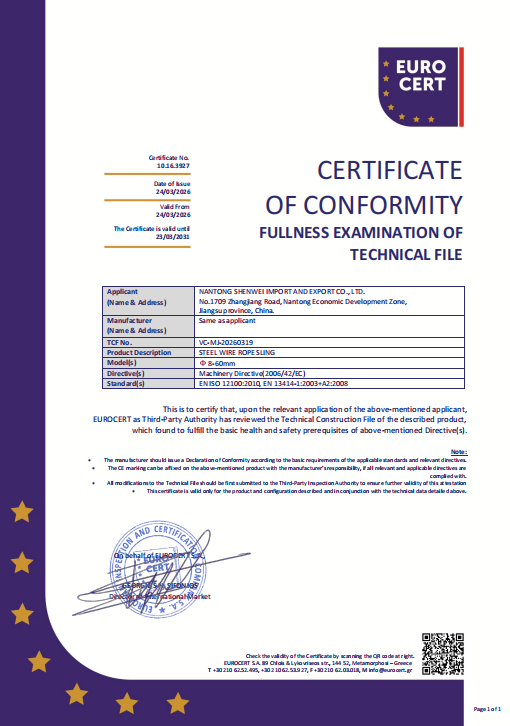
Our products are exported to North America, South America, Europe Southeast Asia, etc. We have been certificated by API-9A, ISO9001: 2000, CE, and others. We can produce products according to various standards such as GB, DIN, EN, ASTM, etc. And we have also gained high evaluations in China, such as Jiangsu Market User Satisfaction Product, AAA Credit Enterprise, and so on.
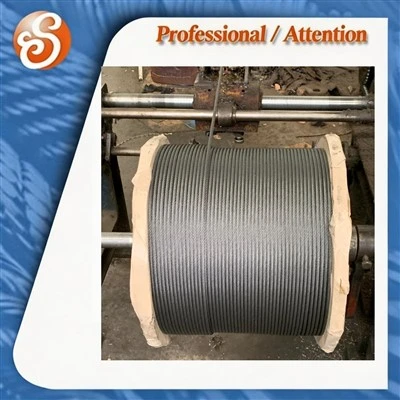


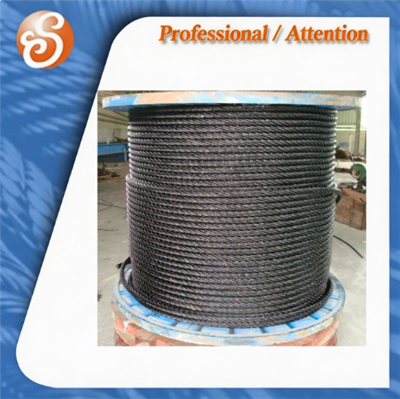
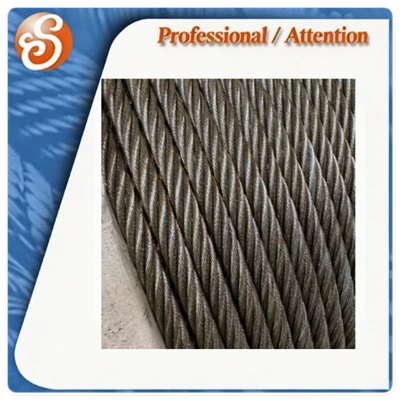


Product Categories
Latest Products


Wire rope is a collection of metal strands that have been twisted and wound to form the shape of a helix to support and lift heavy loads and perform tasks that are too rigorous for standard wire. On shipping docks, rigging, and load-bearing equipment, wire rope is attached to swivels, shackles, or hooks to lift a load in a controlled, even, and efficient manner.
The uses for wire rope include adding support to suspension bridges, lifting elevators, and serving as additional reinforcement for towers. The design of wire rope, with its multiple strands wrapped around a stable core, provides strength, flexibility, and ease of handling for applications that have bending stress.
It is a preferred lifting device for many reasons. Its unique design consists of multiple steel wires that form individual strands laid in a helical pattern around a core. This structure provides strength, flexibility, and the ability to handle bending stresses.
Components of Wire Rope
Wire
Wires are the smallest component of wire rope and they make up the individual strands in the rope. Wires can be made from a variety of metal materials including steel, iron, stainless steel, monel, and bronze. The wires can be manufactured in a variety of grades that relate to the strength, resistance to wear, fatigue resistance, corrosion resistance, and curve of the wire rope.
The wires themselves can be coated but are most commonly available in a “bright” or uncoated finish.
Strands
Strands of wire rope consist of two or more wires arranged and twisted in a specific arrangement. The individual strands are then laid in a helical pattern around the core of the rope.
Strands made of larger-diameter wires are more resistant to abrasion, while strands made of smaller-diameter wires are more flexible.
Core
The core of a wire rope runs through the center of the rope supports the strands and helps to maintain their relative position under loading and bending stresses. Cores can be made from several different materials including natural or synthetic fibers and steel.
Lubrication
Lubrication is applied during the manufacturing process and penetrates to the core. Wire rope lubrication has two primary benefits:
Reduces friction as the individual wires and strands move over each other
Provides corrosion protection and lubrication in the core, inside wires, and outside surface
Why are steel wire ropes important?
Steel wire ropes play a critical role in many modern industries, including construction, mining, oil and gas, shipping and transportation, and hoisting and lifting. There are several reasons for this:
Strength and durability
Steel wire ropes are made from high-strength steel wires that are twisted together to form a strong and durable rope. This makes them ideal for use in heavy-duty applications where high load capacities are required.
01
Flexibility
Steel wire ropes are flexible, with an increased number of strands for lifting purposes. This makes them well-suited for use in applications where the load may change shape or position, such as in cranes or hoists, as the wire rope undergoes movements at different locations.
02
Corrosion resistance
Steel wire ropes are often coated through galvanizing with a protective layer to prevent corrosion, making them suitable for use in harsh environments where they may be exposed to moisture, chemicals, or other corrosive substances.
03
Versatility
Steel wire ropes can be made in a wide range of sizes and configurations to suit different applications, from ropes used as guy cables to large-diameter wire ropes used in offshore, oil and gas operations.
04
Cost-effectiveness
Steel wire ropes are relatively less expensive when compared to other types of stainless steel ropes and PVC-coated ropes, making them a more cost-effective solution for many applications.
05
Application of the rope
Steel wire ropes have a wide range of applications across various industries due to their strength, durability, and flexibility. Some of the most common applications are:
Construction
Steel wire ropes are used for hoisting heavy equipment and materials, such as cranes and elevators.
Mining
Steel wire ropes are used to transport minerals, coal, and other materials in mines and underground operations.
Maritime and Offshore Operations
Steel wire ropes are used in ships, oil rigs, and other offshore structures to lift heavy equipment and support operations.
Forestry
Steel wire ropes are used to haul logs and lumber in forestry operations.
Aerial Lifts
Steel wire ropes are widely used in aerial transportation to transport people and materials. It is used in the different types of rope ways.
Energy and Utility
Steel wire ropes are used in the installation process of wind towers in offshore wind energy applications.
Types of steel wire ropes
Galvanized steel wire rope
A steel write rope with a layer of zinc, which helps prevent the ropes from corrosion and rusting. Mostly suitable for construction in wet places, these wire ropes prevent the deposition of dust in the inner steel.
Ungalvanized steel wire rope
Ungalvanized wires are designed to be flexible with a good fatigue life. Ungalvanized Wires are extensively used in general industries, including crane ropes, winch ropes, hoist ropes, wire ropes, and rigging applications.
Stainless steel wire rope
Stainless steel material is ideal for use in corrosive environments, in particular marine and waste management. Other common applications include decorative balustrading and outdoor use. 304-grade stainless steel rope is typically a standard grade.
PVC-coated steel wire rope
PVC-coated wire rope helps protect the wires and strands from abrasions making it more resistant to wear and tear. This can be a useful quality of the wire rope when it is being used in high-frictional applications over pulleys on gym equipment, cranes, lifting equipment, conveyors, elevators, etc.
Non-rotating steel wire rope
Non-rotating wire rope or rotation-resistant wire rope has a different construction to standard. as wires and strands are not laid in the same direction as they would be on standard rope. Inner and outer strands of wires are laid in opposite directions.
Elevator steel wire rope
8×19 class wire rope is the world's most frequently used strand construction for Elevator ropes is the 19-wire Seale strand (1-9-9). The thicker wires of the outer strand layer provide greater wear resistance.
Steel wire rope production process
Making the wire. The raw material for wire products is supplied by steel mills. The billets are made into wire rods through the hot rolling process.
Surface treatment of wire rod. Rust and scales are removed from the wire rod surface. The wire rod surface coating facilitates drawing.
First drawing. After the descaling and surface coating treatment, the wire rod will go to the first drawing, where it will be drawn to the required diameter, resulting in a semi-finished wire with mechanical properties suitable for the application. Then the wire will be heat-treated to facilitate the drawing.
Draw again to obtain the wire of the required diameter.
Make strands, and combine the drawn steel wires into one strand.
Combine the strands to form a rope according to the structure of the wire rope.
Advantages of our steel wire ropes
1.High Strength: Wire ropes are known for their exceptional strength. They can handle heavy loads and are often used in applications where strength and durability are critical, such as lifting, hoisting, and towing.
2.Flexibility: Wire ropes are flexible and can bend easily around sheaves, drums, and other equipment components. This flexibility makes them suitable for applications where the rope needs to pass over pulleys or navigate through tight spaces.
3.Fatigue Resistance: Wire ropes are designed to withstand repeated bending and flexing without suffering from metal fatigue. This property is essential in applications where the rope undergoes constant movement, such as cranes and elevators.
4.Long Service Life: When properly maintained, wire ropes can have a long service life, making them cost-effective in the long run. Regular inspections, lubrication, and replacement of worn ropes are essential for prolonging their lifespan.
5.Corrosion Resistance: Some wire ropes are coated with materials like galvanized steel or stainless steel to enhance their corrosion resistance. This is particularly important in outdoor and marine applications, where exposure to moisture and harsh environments can accelerate corrosion.
6. High Load-Carrying Capacity: Wire ropes have a high load-carrying capacity compared to other types of ropes. This property is crucial in heavy lifting and towing operations.
7. Versatility: Wire ropes are versatile and can be customized with various constructions, materials, and coatings to suit specific applications. Different configurations, such as braided ropes or stranded ropes, offer flexibility in meeting diverse needs.
8. Excellent Tensile Strength: Wire ropes have excellent tensile strength, meaning they can withstand a significant amount of pulling force or tension without breaking. This property is advantageous in applications where tension loads are prevalent.
9. Reliability: Wire ropes have a well-established track record for reliability and safety in various industries, including construction, mining, maritime, and manufacturing.
10. Resistance to Abrasion: Wire ropes are resistant to abrasion and wear, which is essential in applications where the rope comes into contact with rough surfaces or sharp edges.
11. Temperature Tolerance: Wire ropes can perform in a wide range of temperatures, making them suitable for applications in both hot and cold environments.
12. High Fatigue Resistance: Wire ropes can endure cyclic loading and unloading without suffering from fatigue, making them ideal for applications involving repetitive movements.
What Is the Difference Between Cable and Wire Rope?
Cable and wire rope are two distinct materials used in various applications, each with its unique characteristics and purposes. Cable typically refers to a flexible, single-stranded, or multi-stranded assembly of wires, often encased in an outer sheath for protection. It is commonly used for electrical connections, such as power transmission and data transfer, where flexibility and conductivity are essential.
Wire rope is a robust and more rigid structure, comprising multiple strands of steel wires twisted together to form a strong, durable cord. Wire ropes excel in applications that demand exceptional strength and resistance to heavy loads, making them essential in construction, maritime, and industrial settings.
Product Specifications
Construction: 6x7, 6x19S, 6x24, 6x36, etc..
Diameter, length, and quantity:1-60mm
Coating/Surface: Electric galvanized/ Hot dipped galvanized/ ungalvanized/ PVC PE PA Nylon coated/ 304 316 316L stainless
Lay direction: Zs/ Sz/ Zz/ Ss
Type of core:Fiber core(JC/ SC/ PPC) or steel core
Tensile strength: 1570N/MM2, 1670N/MM2, 1770N/MM2, 1870N/MM2, 1960N/MM2, 2160N/MM2
Lubrication: Yellow grease, black asphalt grease, special grease for elevator.
Standard: GB, DIN, AISI, etc..
Our Certificate


Factory Tour


FAQ
Q: Are you a trading company or a manufacturer?
Q: When was your factory established?
Q: How about your lead time?
Q: What brand of raw material do you use?
Shagang Group is the domestic production base of high-quality steel. It is not only one of the world's top 500 enterprises but also the largest private steel enterprise in China.
Q: Where are you loading?
Q: Which countries do you export?
Q: Could you send us the samples?
Q: Do you have a quality test report?
Q: What are your advantages compared with other factories?
We also have a small packing workshop which can pack our products for supermarkets. We can meet the customized requirements of our customers.
Maybe our price is not the lowest, but our price matches the quality with super cost-effective. And we have excellent service, no matter in the pre-sale hands or after-sale, your problems will be solved!
Q: Are your prices the best in Nantong?
Maybe some small factories can give you a lower price, but they don't have any after-sale guarantee. If you have quality problems after receiving the goods, they may not give you any solution.
Q: Do you have any certificates?
Q: What kinds of professional production equipment do you have in your factory?
Q: How is the quality of your products?
Q: What payment terms do you accept?
Q: Do you have the CIF price?
Q: What products do you supply?
Q: Where is your factory located?
Factory 3D VR: https://www.linked-reality.com/company/13904
Office address: Room,1505, Fortume Center, Nantong Hotel, No 81, Qingnian East Road, Nantong City, Jiangsu, China
Q: What is the material you can supply?
Q: How to place an order?
Diameter, Construction, Coating, Length, Packing, Quantity, etc.
Q: How to get the specific price?
Nantong Shenwei Steel Wire Rope Co., Ltd. is well-known as one of the leading steel wire rope manufacturers and suppliers in China since 1994. Our factory offers high quality steel wire rope made in China with competitive price. Welcome to contact us for quotation.
