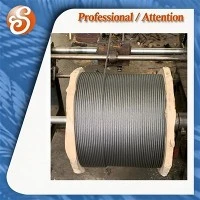
Wire rope is a flexible and strong rope made from multiple twisted steel wires. It is commonly used in lifting, hoisting, and hauling applications. Wire ropes can be categorized into different types, each with its own advantages and applications in different situations. When selecting a wire rope, it's important to carefully consider the specific project requirements and environmental conditions to ensure safe and efficient operation.
I. Wire Rope Structure Types:
1. Single-strand wire rope: Made from a single steel wire, it's typically used for transmission and tensioning of small mechanical equipment. Due to the limited strength of a single steel wire, its load-bearing capacity is generally low, making it suitable for light loads.
2. Multi-strand wire rope: Made from multiple twisted steel wires, it comes in two types: spiral rope and parallel rope. Multi-strand wire ropes offer low torsion, strong bending and twisting resistance, and are suitable for applications requiring heavy loads, high strength, and a long life.
(1) Spiral rope: Spiral rope is made by twisting several strands of steel wire into one strand, and then twisting the strands together. It has good elasticity and strong wear resistance and is suitable for hoisting, traction and other occasions.
(2) Parallel rope: Parallel rope is made by twisting multiple strands of steel wire in parallel. It has high tensile strength and is suitable for hoisting and lifting of large machinery and equipment.
II. Uses of wire ropes with different structures:
1. Single-strand wire rope: Suitable for light lifting and fixing occasions, such as transmission of small machinery and equipment, rope hoisting, etc.
2. Spiral rope: Suitable for hoisting, lifting, vehicle traction and other occasions. It has the characteristics of fatigue resistance, wear resistance and strong load-bearing capacity.
3. Parallel rope: Suitable for heavy load, long-distance lifting, lifting and fixing occasions, such as lifting of large machinery and equipment, ship traction, etc.
III. Principles of wire rope selection:
1. Select the appropriate structure type according to project requirements: Select the appropriate wire rope structure type according to the actual project usage to ensure safety and reliability.
2. Select appropriate specifications and materials based on the working environment: Choose wire rope specifications and materials that are suitable for the working environment, and ensure that corrosion resistance, abrasion resistance, and other properties meet the project requirements.
3. Select appropriate length based on load capacity: Select the appropriate wire rope length and quantity based on factors such as the required load and lifting height.
Regular inspection and maintenance: Wire ropes should be regularly inspected and maintained during use to prevent accidents caused by damage or wear.