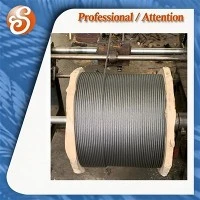
Ever stood in the aisle looking at two coils of wire rope, wondering why the price is different? The tag holds the answers. Those numbers and codes – the specifications – tell you exactly what you're getting. They're not just for engineers. Knowing a few basics helps you buy the right rope for your job and your budget.
Start with the construction. You'll see something like "6x19" or "7x7." The first number is the number of strands. The second is the number of wires in each strand. A 7x19 rope is more flexible than a 7x7. which is built for toughness. Next, check the core. A fiber core (FC) is common and costs less, maybe around $0.60 per foot for a 1/4-inch size. An independent wire rope core (IWRC) adds strength and heat resistance, but the price goes up, often over $1.00 per foot for the same diameter. It's built for heavier loads.
Then there's the diameter. Measure it with a caliper. A 3/8-inch rope isn't just thicker than a 1/4-inch; it's significantly stronger. The grade is crucial, too. A "1960" grade is stronger than a "1770" grade in the same size. This strength rating, plus the diameter, gives you the minimum breaking force – the point where it would fail. You never work near that number. Always use a safe working load with a proper safety factor. Finally, look at the finish. Bright wire is basic. Galvanized coating fights rust and is standard for outdoor use, adding to the cost but extending the rope's life.
These specs are your guide. A 100-foot coil of 5/16-inch 6x19 IWRC galvanized rope might be priced at $150. while a similar length with a fiber core could be under $100. The difference is in the details on the tag. Don't guess. Bring your project details to the counter, and we'll help you match them to the specifications you need. It's the simplest way to get value for your money.