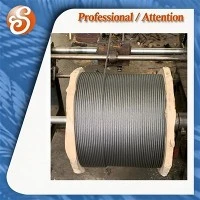
Wire ropes are flexible ropes composed of multiple twisted steel wires. They are commonly used in engineering and construction applications such as lifting, traction, securing, and support. Depending on the lay direction, wire ropes are categorized as left-lay and right-lay. Each type of wire rope has its own unique characteristics and applications.
Left-lay wire ropes are characterized by their tight twist after bending. While deforming slightly under compression, they retain their original shape. Left-lay wire ropes have a wide range of applications, including lifting, transportation, and pulling. When using left-lay wire ropes, it is important to keep them dry to prevent rust and damage to ensure their longevity.
Right-lay wire ropes, on the other hand, exhibit a looser twist after bending, but can deform significantly under compression, requiring special treatment to restore their original shape. Right-lay wire ropes are suitable for applications requiring resistance to tensile forces, such as cableways, elevators, and suspension bridges. When using right-hand lay wire ropes, care must be taken to avoid excessive stretching and twisting to ensure optimal performance and longevity.
In general, left-lay and right-lay wire ropes each have their own applications and characteristics. Choosing the appropriate lay direction can maximize performance and ensure safe and reliable operation. In actual projects, the appropriate wire rope should be selected based on specific needs and requirements to ensure smooth and successful project execution.