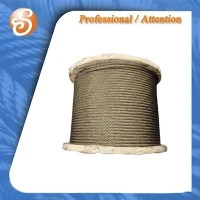
If you’re in the business of supplying spring steel wire—or, more importantly, relying on it for products that need to flex, compress, and rebound day after day—you know brittleness is an uninvited guest. A spring that snaps under mild pressure, a wire that cracks during forming, or a part that fails unexpectedly because it’s too brittle isn’t just a product flaw—it’s a headache for both you and your customers. As a spring steel wire supplier, I’ve spent years troubleshooting this exact issue, working with manufacturers, engineers, and fabricators who’ve brought me samples of brittle wire that should’ve been resilient. The good news is that reducing brittleness in spring steel wire isn’t a black box; it’s a mix of science, process control, and targeted adjustments that anyone in the supply chain can implement.
First, let’s ground this in what spring steel wire actually is, and why its brittleness becomes a problem. Unlike plain carbon steel, spring steel is engineered to have high tensile strength and the ability to return to its original shape after deformation. Brittleness occurs when the material lacks sufficient toughness—the ability to absorb energy before fracturing—so instead of bending under stress, it cracks or breaks. This is often caused by microstructural flaws, improper heat treatment, residual stresses, or even issues with the raw material itself. For suppliers, that means the work starts long before the wire is spooled and shipped. If you’re offering a high-quality product like Black Spring Steel Wire, as seen at /steel-wire/ungalvanized-steel-wire/spring-steel-wire.html, understanding these root causes is key to delivering wire that performs.
Let’s start at the source: raw material selection. The chemical composition of spring steel wire is the foundation of its properties, and even tiny deviations can make a huge difference in brittleness. Most spring steels are high-carbon steels (typically 0.5–1.0% carbon) or alloy steels with elements like manganese, silicon, chromium, or vanadium. Manganese, for example, helps harden the steel and improves toughness, while silicon enhances elastic properties—but too much silicon can lead to embrittlement. Phosphorus and sulfur, often called tramp elements, are common culprits of brittleness: phosphorus segregates at grain boundaries, making them weak and prone to cracking, while sulfur forms manganese sulfide inclusions that can act as fracture points if not properly controlled. As a supplier, I test every batch of raw steel for tramp elements, keeping phosphorus levels under 0.03% and sulfur under 0.02% to avoid these issues. I also work closely with my steel mills to adjust alloy ratios per customer needs: for example, a customer making small clock springs might need a higher manganese content for flexibility, while someone manufacturing heavy-duty truck springs might require a balance of chromium and vanadium for strength without brittleness.
Next, the wire drawing process—this is where the raw steel is transformed into the thin wire used for springs, and it’s a critical stage for controlling brittleness. Wire drawing involves pulling a steel rod through a series of dies to reduce its diameter, which work-hardens the material, increasing tensile strength. But if the process is done improperly, it can introduce severe residual stresses and surface defects that make the wire brittle. The key here is controlling the reduction per die, the drawing speed, and the lubrication used. I used to run my drawing dies at a constant speed to boost output, but I quickly noticed that faster speeds left more residual stress in the wire—stress that would cause cracking during spring coiling or under load. Now, I adjust drawing speeds based on the wire gauge: thinner wire (under 2mm) runs at slower speeds, while thicker wire can handle slightly higher speeds, as long as we monitor surface temperature. Lubrication is another often-overlooked detail. I switched from generic oil-based lubricants to graphite-based or polymer lubricants that form a uniform, low-friction layer between the wire and the die. This reduces friction during drawing, which minimizes surface scratching and uneven work-hardening—both of which are major sources of brittleness. For example, a customer once brought back wire that was cracking after being bent into a V-shape; testing showed surface scratches from a dull die and uneven work-hardening. After adjusting our die maintenance and lubrication, those defects vanished.
Heat treatment is arguably the most important step in reducing brittleness of spring steel wire, because it’s where we tailor the microstructure of the steel to balance strength and toughness. Most spring steels are heat treated using a process called quenching and tempering: first, the wire is heated to its austenitizing temperature (around 800–900°C), then rapidly quenched in water or oil to form a hard, brittle microstructure called martensite. Wait—if martensite is brittle, why do we do that? Because the second step, tempering, transforms that martensite into a tougher microstructure called tempered martensite, which has both high strength and good resilience. The tempering step is make-or-break here: too short or too low a tempering temperature, and the wire remains too brittle; too long or too high, and it loses too much strength. For my wire, I temper at temperatures between 350–500°C, depending on the gauge and application. For example, small gauge wire (used for electrical springs) is tempered at a lower temperature (around 380°C) to retain fine detail, while heavy gauge wire for industrial shock absorbers is tempered at 480°C for maximum toughness. I also use a controlled atmosphere furnace for heat treatment—no oxygen, so there’s no scale formation on the wire surface, which can create stress raisers. A common mistake I see other suppliers make is skipping the tempering step entirely, or rushing it to save time, which results in wire that looks good but snaps under the first load.
Another key factor is stress relieving, which is closely related to heat treatment but often done as a separate step, especially for wire that’s going to be formed into springs after drawing. Residual stresses from drawing, coiling, or even storage can make the wire brittle, because they add to the stresses the wire will face during use. Stress relieving involves heating the wire to a temperature below its tempering point (usually 200–300°C) and holding it there for several hours to let those residual stresses dissipate. This is especially important for custom wire that’s cut to length before being shipped; I used to cut wire cold, which introduced a lot of shearing stress at the cut ends. Now, I heat the wire slightly before cutting, and then run it through a stress relieving oven before spooling, which eliminates that end stress. One of my regular clients who makes medical device springs told me this small change cut their failure rate by 40%, because the wire no longer cracked at the cut edges during coiling.
Surface quality is also a big one. Any scratch, nick, or corrosion on the wire surface acts as a stress concentration point, where cracks can initiate and spread—this is called the “notch effect.” As a supplier, I’ve invested in automated surface inspection equipment that scans every spool of wire for surface defects. If a wire has a minor scratch, I’ll adjust the drawing die to prevent future scratches, or reject the spool if the defect is too deep. Corrosion is another enemy; even minor rust on spring steel wire can make it brittle over time, because rust expands and creates cracks in the wire. For this reason, I store all wire in climate-controlled warehouses, and if a customer needs uncoated wire, I add a temporary anti-corrosion coating that’s easy to remove during their fabrication process. For customers who need a more durable finish, I also offer wire like Black Spring Steel Wire, which has a black oxide coating that not only resists corrosion but also provides a uniform surface for stress testing—plus, the black oxide layer is thin enough that it doesn’t affect the wire’s mechanical properties.
Testing is non-negotiable for me as a supplier. I don’t just ship wire based on visual inspection; every batch goes through a series of tests to ensure it’s not brittle. The most common test is the bend test: we bend a 10-inch sample of wire 180 degrees around a mandrel of the same diameter as the wire, and check for cracks or breaks. We also do tensile strength tests to make sure the wire meets the required specs, and impact tests to measure toughness—how much energy the wire can absorb before fracturing. If a batch fails the bend test, I don’t ship it, no matter how close it is to the deadline. Once, I had a large order for spring steel wire for a farm equipment manufacturer that failed the bend test; instead of rushing it out and risking a recall, we re-tempered the batch, adjusted the drawing speed, and tested it again until it passed. That customer has been with me for 5 years, because they trust that I’ll deliver wire that works, even if it means delaying a shipment.
I also work closely with my customers to adjust processes for their specific applications, because brittleness isn’t always the wire’s fault. Sometimes, a fabricator is coiling the wire too tightly, or using the wrong lubricant during coiling, which adds stress and makes the wire brittle. I’ll send a representative to their facility to walk through their process, or share tips like using a slightly larger mandrel for coiling, or pre-heating the wire before forming. For example, a client making automotive valve springs was having issues with wire cracking during coiling; after I suggested heating the wire to 150°C before coiling, their failure rate dropped by 25%. It’s not just about selling wire—it’s about solving their problems.
Now, let’s talk about common myths that I hear all the time. One myth is that all high-strength spring steel is brittle. That’s not true—with the right heat treatment and process control, you can have high tensile strength (over 1500 MPa) and excellent toughness, which is exactly what most applications need. Another myth is that annealing spring steel makes it less brittle. Annealing softens the steel, which can make it easier to form, but it also reduces its tensile strength, so a spring made from annealed wire won’t perform as well under load. The key is balancing strength and toughness, not just softening the wire.
If you’re a fabricator, manufacturer, or engineer looking for spring steel wire that’s resistant to brittleness, the most important thing is to work with a supplier who understands these processes and prioritizes quality over speed. When you order wire, don’t just ask for “spring steel wire”—specify the alloy composition, gauge, tempering temperature, and any specific applications you have. Ask for test reports, and make sure the supplier is transparent about their process controls. If you’re in the market for reliable, low-brittleness wire, I’d be happy to discuss your needs and show you how my wire can fit your project. Whether you need small gauge wire for electronics or heavy gauge wire for industrial machinery, I can tailor the process to reduce brittleness while maintaining the strength and resilience your product requires.
In short, reducing brittleness in spring steel wire is a combination of choosing the right raw materials, controlling every step of the manufacturing process from drawing to heat treatment, testing rigorously, and collaborating with your customers to solve their unique challenges. As a supplier, I’ve learned that every detail matters—from the amount of sulfur in the raw steel to the temperature of the tempering oven, to the way we cut the wire before shipping. By focusing on these factors, I deliver wire that doesn’t just meet specs, but outperforms expectations, so my customers don’t have to deal with snaps, cracks, or failed products. If you’re ready to source spring steel wire that’s tough, resilient, and built to last, get in touch to discuss your requirements.

References
- ASM International. (2007). Metals Handbook: Volume 4, Heat Treating. ASM International.
- Brandt, R. (2014). Spring Steel: Processing, Properties, and Applications. Journal of Materials Engineering and Performance, 23(10), 3521–3530.
- Taylor, D. (2002). Surface Defects and Fatigue in Steel Wire. Wire Journal International, 35(6), 82–87.