If you’ve ever stood beside a crane on a job site, watching it lift a load that could weigh several tons, you’ve probably thought about the part holding that load up: the steel wire rope. For crane operators, riggers, and anyone in the heavy lifting industry, wire rope isn’t just a piece of equipment—it’s the backbone of safe, efficient work. As a steel wire rope supplier, I’ve spent years helping clients troubleshoot performance issues that lead to downtime, costly repairs, or even safety risks. Over that time, I’ve learned that optimizing crane wire rope performance isn’t just about picking the right product; it’s a mix of material science, proper installation, regular maintenance, and smart usage practices. Let’s break down what works, what doesn’t, and how you can make your crane’s wire rope last longer, perform better, and keep jobs running smoothly.
First, let’s start with the foundation: choosing the right wire rope for your specific crane. Not all wire ropes are created equal, and picking the wrong type is one of the most common mistakes I see clients make. Cranes operate in wildly different environments—some work in coastal areas with salt air that eats away at metal, others lift heavy loads every hour in a busy construction yard, and some operate in mild, indoor settings. Each of these needs a different rope.
Let’s talk about construction first. The two most common rope constructions for cranes are 6×7 and 6×19, though there are other variations like 6×37. The “6” refers to the number of strands, and the numbers after the x tell you how many wires are in each strand. For cranes, the core is also critical: there’s fiber core (FC) and independent wire rope core (IWRC). IWRC is sturdier, resists crushing better, and handles heavy loads more reliably than fiber core—so it’s the go-to for most industrial cranes.
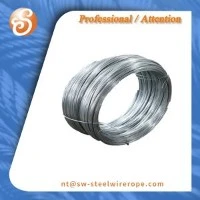
If your crane operates in a corrosive environment—coastal areas, near chemical plants, or in regions with lots of road salt—galvanized wire rope is a must. Galvanization is a process where a layer of zinc is applied to the steel to prevent rust, which is a major killer of wire rope. A corroded wire rope loses strength over time, and small rust spots can turn into broken wires, which are a safety hazard. For example, my team often recommends the 6×19S+IWRC Galvanized Steel Wire Rope for Cranes for clients working near saltwater or in humid climates. This type balances strength with corrosion resistance, so it doesn’t sacrifice performance to avoid rust. It’s also important to note that not all galvanization is the same—look for ISO standards, which ensure the zinc layer is thick enough to actually protect the steel, not just a thin, cosmetic coating. That’s why I always point clients to our Steel Cable 6x7 6x19 6x24+7FC Galvanized With ISO Standard when they need a reliable, compliant product.
For cranes that work in mild, non-corrosive environments, ungalvanized rope can be a great, cost-effective option. Ungalvanized steel wire is solid steel without the zinc coating, so it’s lighter and has slightly more tensile strength than the same size galvanized rope. But you have to be careful: it will rust quickly if exposed to moisture, so it’s only ideal if you can store the rope properly and keep it dry when not in use. For smaller cranes, like those used in general construction or light manufacturing, the Ungalvanized Steel Wire Rope For Cranes 6X7+FC 6mm 8mm works perfectly. These smaller diameters are flexible enough for smaller sheaves, and the 6×7 construction is designed for applications where bend radius is less extreme than heavy lifting. For larger cranes that need to handle really heavy loads, the 16mm 6X37+IWRC Ungalvanized Steel Wire Rope Cable is a great pick. The 6×37 construction has more, thinner wires in each strand, which makes it more flexible, better for bending around sheaves, and less likely to kink when lifting big, bulky loads.
Size matters too. Picking a rope that’s too small for your crane’s capacity is a recipe for disaster. Every crane has a rated load capacity, and your wire rope has to be matched to that, plus a safety factor (usually 5:1 or 6:1 for cranes). I’ve seen clients try to save money by going with a thinner rope, only to have it snap under load, damaging the crane and risking lives. Always check your crane’s manual for the recommended wire rope diameter and breaking strength, and don’t cut corners here. If you’re working with high-volume, heavy lifting, the Heavy-Duty Galvanized Steel Wire Rope For Sale 1000m Length is a solid choice—it’s designed for continuous, heavy use, so it stands up to the daily wear and tear that comes with frequent lifts.
Once you’ve picked the right rope, installation is the next step. Even the best rope will perform poorly if it’s installed incorrectly. Let’s start with handling: wire rope is flexible, but it’s not a toy. Never drop it or drag it across the ground, because that can bend the strands, flatten wires, or create internal damage that you can’t see. When you unspool it, never unwind it from the side of the spool—this creates twists in the rope that lead to kinks, which are permanent damage that drastically reduces strength. Instead, mount the spool on a reel stand and unwind it from the top, which keeps the rope straight and free of twists.
Sheaves are another big part of installation. The sheave diameter has to be at least a certain size relative to the rope diameter—if the sheave is too small, the rope bends too sharply every time it goes around, which causes fatigue in the wires. Over time, that fatigue leads to broken wires, even if the rope is the right material and size. The general rule of thumb for cranes is that the sheave diameter should be at least 20 to 30 times the rope diameter, depending on the rope construction. Always check the manufacturer’s guidelines for your specific rope, and make sure the sheaves on your crane are in good shape—no nicks, cracks, or flat spots, which can also damage the rope as it bends.
Terminating the rope correctly is just as important. The most common termination methods are splicing, clips, and sockets. Splicing is the strongest, but it takes skilled labor to do right. Wire rope clips are cheaper, but you have to use the right number of clips, tighten them to the correct torque, and space them properly. If you use too few clips or tighten them too loose, the rope can slip and come loose from the hook, which is a major safety risk. If you tighten them too tight, you can crush the rope, breaking internal wires. I always advise clients to hire a professional for terminations—poor terminations are one of the leading causes of wire rope failures in cranes.
Now, the part that makes the biggest difference in long-term performance and cost: regular maintenance. Even the best-installed rope will degrade quickly if you neglect it. Maintenance isn’t just checking for broken wires—it’s a routine process that keeps the rope working as it should.
First, regular visual inspections. How often should you inspect your rope? For cranes that work 24/7 in heavy industry, you should do a quick visual check before every shift, and a more thorough inspection weekly. For cranes that work less frequently, monthly checks are enough. What are you looking for? Broken wires—especially at the ends of the rope or where it bends around sheaves. Rust, corrosion, or pitting—if you see rust, that’s a sign the rope is already losing strength. Kinks, flat spots, or crushed strands—these are permanent damage, and if you see them, it’s time to replace the rope, not try to repair it. Also, check the terminations: make sure clips are still tight, sockets are secure, and there are no signs of wear where the rope attaches to the hook or boom.
Lubrication is another key part of maintenance. Wire rope has tiny gaps between the wires and strands, and if moisture or dirt gets in there, it causes corrosion and abrasion. Lubrication acts as a barrier, keeping moisture out and reducing friction between the wires as the rope bends. But not all lubricants are the same—you need a lubricant designed specifically for wire rope. General-purpose grease might work, but it’s often too thick to penetrate into the internal gaps of the rope, so it just coats the outside, leaving the inside unprotected. For cranes working in corrosive environments, use a lubricant that also has rust inhibitors. How often should you re-lubricate? Again, it depends on use: heavy-use cranes need re-lubrication every 1 to 3 months, while lighter-use cranes can go 6 months to a year. Make sure you apply the lubricant thoroughly, not just on the surface—you can use a brush, a spray, or even dip the rope in lubricant, especially for larger diameters.
Storage is often overlooked, but it’s critical for maintaining rope performance. If you’re not using your crane, store the rope properly, not just coiled up on the ground. Coil the rope loosely, hang it vertically on a rack (don’t let it rest on the ground, where it can absorb moisture and pick up dirt), and keep it in a dry, covered area. If you have galvanized rope, make sure the zinc coating isn’t scratched—even a small scratch can start rust. If you have ungalvanized rope, cover it with a tarp or store it in a sealed container to keep moisture out. Never store wire rope near chemicals or other materials that can eat away at the steel.
Even with the best installation and maintenance, wire rope will eventually wear out. Knowing when to replace it is just as important as knowing how to maintain it. The lifting industry has strict guidelines for when to replace a wire rope, and ignoring those guidelines can lead to catastrophic failures. The general rule is that if you see 12 or more broken wires in one lay (one full twist of the strands around the core), or 25 broken wires total in any length of rope, it’s time to replace it. Other replacement signs include broken wires at a termination, excessive corrosion that reduces the rope’s diameter by 10% or more, kinks or flat spots that can’t be straightened, or any signs of internal damage (which you might see as irregular wear or deformation). If you’re unsure whether your rope needs to be replaced, don’t guess—call a professional or your rope supplier. I often help clients assess their rope condition, because it’s better to replace it a little early than to risk a crane failure.


There are also usage practices that can help extend your rope’s life. Avoid overloading the crane—even a few extra tons above the rated capacity puts unnecessary stress on the rope, causing wires to break prematurely. Don’t drag loads along the ground, which causes the rope to abrade against rough surfaces, wearing down the outer wires. When you’re lifting, keep the load centered in the hook, not off to one side, which puts uneven stress on the rope strands. And never use wire rope to pull a load at an angle that’s too steep—if the load is off-center, it can cause the rope to bend incorrectly, leading to kinks or broken wires.
As a steel wire rope supplier, I’ve seen firsthand how a little attention to these practices can make a huge difference. I once had a client who was replacing his crane’s rope every 3 months due to excessive breakdowns. After we adjusted his rope selection, installation, and maintenance routine, his rope lasted over a year. He saved thousands of dollars in replacement costs and avoided multiple days of downtime on his job site. That’s the thing about optimizing wire rope performance: it’s not rocket science, but it requires consistent attention to detail, from the initial choice of rope to every inspection and re-lubrication.
If you’re looking to upgrade your crane’s wire rope, or you’re tired of constant replacements and breakdowns, we’re here to help. We offer a full range of ungalvanized and galvanized steel wire ropes, designed for every type of crane and every working environment. Whether you need small diameter ungalvanized rope for light industrial cranes, heavy-duty galvanized rope for coastal construction sites, or ISO-compliant cables for heavy lifting, we have options that fit your needs. Our team can also help you assess your current setup, recommend the right rope for your crane, and answer any questions you have about installation and maintenance. Don’t let subpar wire rope slow you down or put your team at risk—reach out to us to discuss your requirements and find the perfect solution for your crane.
References
- American Society of Mechanical Engineers (ASME). (2020). ASME B30.9: Wire Rope. New York, NY: ASME International.
- Crane Manufacturers Association of America (CMAA). (2019). Specification No. 70: Crane Wire Rope Selection and Care. Cleveland, OH: CMAA.
- International Organization for Standardization (ISO). (2018). ISO 2408: Steel Wire Ropes for General Lifting Purposes. Geneva, Switzerland: ISO.
- Occupational Safety and Health Administration (OSHA). (2022). Wire Rope Safety Standards, 29 CFR Part 1926 Subpart CC. Washington, DC: U.S. Department of Labor.
- National Association of Crane & Transmission Operators (NACTO). (2021). Wire Rope Maintenance Best Practices. Des Plaines, IL: NACTO.