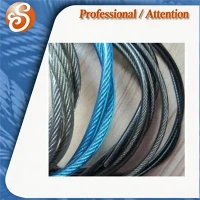
If you’re in the market for galvanized whip checks, you’ve likely already realized these small but critical components play a huge role in workplace safety—especially in lifting, rigging, and industrial settings. As someone who’s been supplying these parts for over a decade, I can’t tell you how many times I’ve heard from clients who either bought cheap, off-the-shelf whip checks that failed prematurely, or struggled to find a product that matched the exact specifications of their lifting gear. Today, I’m breaking down where to find high-quality galvanized whip checks, how to vet your options, and why partnering with a reliable supplier beats cutting corners here.
First, let’s get clear on what galvanized whip checks do. Put simply, they’re safety cables designed to prevent loads from swinging, falling, or disconnecting if a primary lifting sling or wire rope fails. Galvanization is non-negotiable here because it adds a layer of corrosion resistance that works in harsh environments—think construction sites, shipyards, agricultural facilities, or manufacturing plants where moisture, chemicals, and extreme temperatures are par for the course. A non-galvanized whip check might look fine at first, but rust can weaken the wire over time, turning a safety feature into a hazard.
So where should you actually buy these? Let’s start with the most obvious: reputable industrial supply companies that specialize in rigging and lifting components. But not all suppliers are created equal. Many big-box industrial stores carry generic whip checks, but they might not offer custom sizes, strict quality testing, or the specific galvanization grade you need. For example, if you’re working with a specific wire rope sling, your whip check needs to match its diameter, tensile strength, and length to be effective. That’s where a dedicated supplier makes all the difference—we work directly with clients to match whip checks to their existing gear, or recommend the right combination for new projects.
Another great place to source galvanized whip checks is from online industrial marketplaces, but here’s the catch: you have to dig past the cheap listings that promise the world but don’t provide specs. I’ve seen clients buy whip checks from online platforms that list “galvanized” products only to find they’re actually zinc-plated, a process that’s thinner and offers far less corrosion protection. If you go this route, make sure the product description clearly states hot-dip galvanization—this is the gold standard for industrial use, as it creates a thick, durable zinc coating that bonds tightly to the steel.
If you’re already using lifting slings, that’s a perfect entry point to find compatible whip checks. For example, if you rely on multi-leg slings like the Four Leg Wire Rope Sling, each leg needs a corresponding whip check to keep it secured. Whip checks work alongside these slings to add an extra layer of safety; without them, a broken sling leg could lead to a catastrophic load swing. The good news is that many reputable sling suppliers, like the ones offering high-quality slings, also carry complementary components like galvanized whip checks. We often recommend our clients pair their slings with whip checks from the same supplier to ensure tensile strength matching—after all, a sling rated for 10,000 lbs needs a whip check that can handle at least that, if not more.
Wait, let’s circle back to those sling types because they tie directly into why whip checks matter. If you use a single-leg sling, like the Sling with Spliced Termination, a whip check helps keep the load centered and prevents the sling from swinging sideways if it slips. For double-leg slings, whether they’re a basic double-leg setup or the Sling with Soft Eye Two Legs, whip checks stop each leg from rotating or tangling during lifts. Even a simple 7x7 wire rope sling, which is a common choice for lightweight to medium loads, needs a matching whip check to meet OSHA and industry safety standards. I can’t stress enough that using the wrong size or strength whip check with any of these slings is a risky move—we’ve had clients come to us after a close call where a mismatched whip check slipped off during a lift, and that’s exactly why we emphasize buying from a supplier that can pair the two correctly.
Now, let’s talk about red flags to avoid when purchasing galvanized whip checks. First, if a supplier can’t provide load test data for their products, walk away. All industrial safety components need to be tested to ensure they meet tensile strength requirements—there’s no “one-size-fits-all” here. A galvanized whip check that looks identical to another might have a thinner wire core, making it useless for heavy loads. Second, avoid suppliers that sell whip checks in bulk without labeling their specifications. Each whip check should have the diameter, length, tensile rating, and galvanization type clearly marked—this isn’t overkill; it’s how you verify it’s safe for your application.


I also recommend looking for suppliers that offer custom options. Not every lifting setup is standard, and sometimes you need a whip check that’s a specific length or has a unique end fitting to attach to your sling. For example, if you have a custom double-leg steel cable lifting slings setup with non-standard end connectors, a generic whip check won’t work. A good supplier will work with you to fabricate whip checks to your exact measurements, ensuring a perfect fit and maximum safety.
Another factor to consider is after-sales support. When you buy from a dedicated supplier, you don’t just get a product—you get access to expertise. If you’re unsure whether a 1/4-inch galvanized whip check is right for your 7x7 wire rope sling, a reliable supplier will walk you through the math: the whip check should have a breaking strength that’s at least equal to the sling’s working load limit. They’ll also help you calculate the correct length—usually 12 to 18 inches of whip check per foot of sling, depending on the load. Big-box stores and generic online sellers rarely offer this kind of personalized advice, which is why so many of our repeat clients started with a bad experience elsewhere and switched to us.
Let’s address a common question: can I make my own galvanized whip checks? In theory, you could, but in practice, this is a bad idea for most industrial applications. To make a safe whip check, you need the right galvanized wire, proper crimping tools, and knowledge of how to calculate the correct loop size and breaking strength. A homemade whip check might look sturdy, but a poorly crimped end or a wire with insufficient tensile strength can fail during a lift, leading to injury or damage to property. We always advise against DIY safety components—investing in pre-made, tested galvanized whip checks is far cheaper than the alternative of an accident.
So, putting this all together, the best places to buy galvanized whip checks are:
- Reputable industrial rigging suppliers that specialize in safety components and offer custom sizing. These suppliers can match whip checks to your existing slings (like steel cable lifting slings, Four Leg Wire Rope Sling, or Sling with Soft Eye Two Legs) and provide load test data.
- Online marketplaces with verified, industrial-grade products—stick to sellers that are transparent about their galvanization process and provide detailed specs.
- Sling manufacturers that offer complementary safety components. This ensures your whip checks and slings are made to work together, eliminating compatibility issues.
Now, if you’ve been searching for a supplier that checks all these boxes—offering high-quality hot-dip galvanized whip checks, custom sizing, load test documentation, and personalized expertise—I’m here to help. Whether you need a single whip check for a small project or a bulk order for a large construction site, we can tailor our products to your exact needs. Don’t risk your safety or your equipment with subpar components—reach out today to discuss your galvanized whip check requirements and get a quote that fits your budget and your standards.
References:
- Occupational Safety and Health Administration (OSHA) standards for rigging equipment and safety components
- American Society of Mechanical Engineers (ASME) B30.9 Safety Standard for Slings
- ASTM A123/A123M Standard Specification for Zinc (Hot-Dip Galvanized) Coatings on Iron and Steel Products
- Industry data on whip check failure causes and prevention from the Industrial Rigging Safety Association