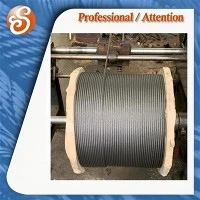
Choosing the right steel wire rope depends on more than diameter and breaking strength. Rope construction also affects flexibility, abrasion resistance, and service performance.
DIN 3055 and DIN 3060 are commonly used designations for two general-purpose wire rope constructions.
1. What Is DIN 3055 Steel Wire Rope?
DIN 3055 is commonly associated with 6×7 steel wire rope, which consists of six strands with seven wires per strand, often with a fiber core (FC).
Its relatively large outer wires provide good resistance to surface abrasion, while the rope is comparatively stiff. It is often used for guying, fencing, suspension, and other applications where flexibility is not the main priority.

2. What Is DIN 3060 Steel Wire Rope?
DIN 3060 is commonly associated with 6×19 steel wire rope, typically constructed with six strands and 19 wires per strand, often with a fiber core.
Compared with 6×7 rope, its finer wires generally provide greater flexibility. Common applications include general-purpose rigging, winches, and installations involving repeated bending over rollers or sheaves, provided the rope meets the equipment requirements.

3. DIN 3055 vs. DIN 3060: Key Differences
| Feature | DIN 3055 (6×7) | DIN 3060 (6×19) |
|---|---|---|
| Wire construction | Fewer, larger wires | More, finer wires |
| Flexibility | Relatively stiff | Generally more flexible |
| Abrasion resistance | Good surface wear resistance | Depends on wire grade and operating conditions |
| Typical uses | Guying, fencing, static suspension | General rigging, winches, bending applications |

4. How to Choose the Right Steel Wire Rope
Choose 6×7 steel wire rope when abrasion resistance and a relatively stiff rope are priorities. Consider 6×19 steel wire rope when the application requires more flexibility or repeated bending.
Before purchasing galvanized steel wire rope or other steel cable products, check the required diameter, core type, tensile grade, minimum breaking force, corrosion exposure, and sheave diameter.
Always confirm the full specification and applicable standards with your supplier or equipment manufacturer. The DIN designation alone does not establish that a rope is suitable for every lifting or load-bearing application.
Conclusion
DIN 3055 and DIN 3060 represent different approaches to general-purpose steel wire rope construction. Understanding the differences between 6×7 and 6×19 helps buyers select a rope that better matches their project's flexibility, wear, and operating requirements.