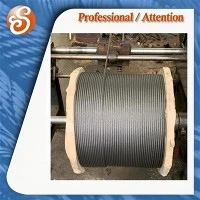
1. High-Quality Carbon Steel
Most conventional elevator wire ropes are made from high-strength carbon steel wires. The material must provide sufficient tensile strength and withstand repeated bending as the rope travels over elevator sheaves.
2. Tensile Strength and Wire Quality
Elevator wire rope tensile strength is a key specification. Wire diameter, tensile strength grade, and manufacturing consistency all affect the finished rope's performance. The required grade should match the applicable standard and elevator manufacturer's specifications.

3. Bright or Galvanized Wire Finish
Elevator wire ropes are commonly manufactured with bright steel wires. Galvanized wires may be used for applications requiring additional corrosion protection, depending on the rope type and equipment requirements.
4. Suitable Core Material and Rope Construction
The core supports the rope's strands and influences flexibility, elongation, and structural stability. Common options include fiber core (FC) and independent wire rope core (IWRC). Constructions such as 8×19S+FC and 8×19S+IWRC are examples used in elevator wire rope applications, but the correct specification depends on the elevator system.

5. Quality Testing and Standards
Material selection alone is not enough. Elevator steel wire rope should meet relevant requirements for rope diameter, minimum breaking force, wire properties, and testing. ISO 4344:2022 specifies minimum manufacturing and testing requirements for covered carbon steel wire ropes used in lifts.
6. Conclusion
Choosing the right elevator wire rope requires attention to steel quality, tensile strength, wire finish, core type, and rope construction. Always confirm the complete rope specification and applicable safety requirements before purchasing or replacing elevator wire rope.