Introduction
If you work with steel wire ropes, you know that cutting is an important part of the manufacturing and packaging process. Whether it is cutting a newly manufactured wire rope after the closing process or dividing a large coil into several smaller lengths, every cut needs to be accurate and properly handled.
Unlike ordinary steel wire, a steel wire rope consists of multiple strands twisted around a central core. When the rope is cut without proper preparation, the strands may loosen, the rope end may become distorted, and individual wires may spread apart. This can affect the appearance, handling, and subsequent use of the rope.
At our steel wire rope manufacturing facility, cutting is required in two main production stages: after rope closing and during small-coil processing.
In this guide, we will explain why proper cutting matters, which tools are commonly used, how steel wire ropes are cut in manufacturing, and what buyers should consider when ordering customized rope lengths.
1. Why Is Proper Steel Wire Rope Cutting Important?
Steel wire rope is made by twisting individual steel wires into strands and then closing multiple strands around a core. This structure gives the rope its strength and flexibility, but it also means that the strands need to remain in their correct positions after cutting.
Improper cutting may cause several problems:
Loose strands: Without proper securing, the strands may loosen or spread apart after cutting.
Deformed rope ends: Excessive pressure from unsuitable tools may flatten or distort the rope.
Uneven cutting: An inaccurate cut can affect the final rope length and packaging.
Sharp wire ends: Burrs and protruding wires can create handling and safety risks.
Difficult handling: Unsecured rope ends may make coiling, packaging, and subsequent processing more difficult.
For manufacturers, proper cutting is not only about separating one rope section from another. It is also about maintaining the rope's construction, achieving the required length, and preparing the product for the next production stage.
2.Two Common Steel Wire Rope Cutting Processes in Manufacturing
In a steel wire rope factory, cutting usually takes place at different stages depending on the production requirements.
2.1
Cutting After the Rope Closing Process
The main considerations at this stage include:
Maintaining the original rope construction.
Securing the rope on both sides of the cutting point.
Choosing a suitable cutting method for the rope diameter and construction.
Keeping the cut straight and minimizing deformation.
Preparing the rope ends for the next processing or packaging stage.
2.2
Cutting Steel Wire Rope into Small Coils
Another common process takes place in the small-coil or retail packaging workshop.
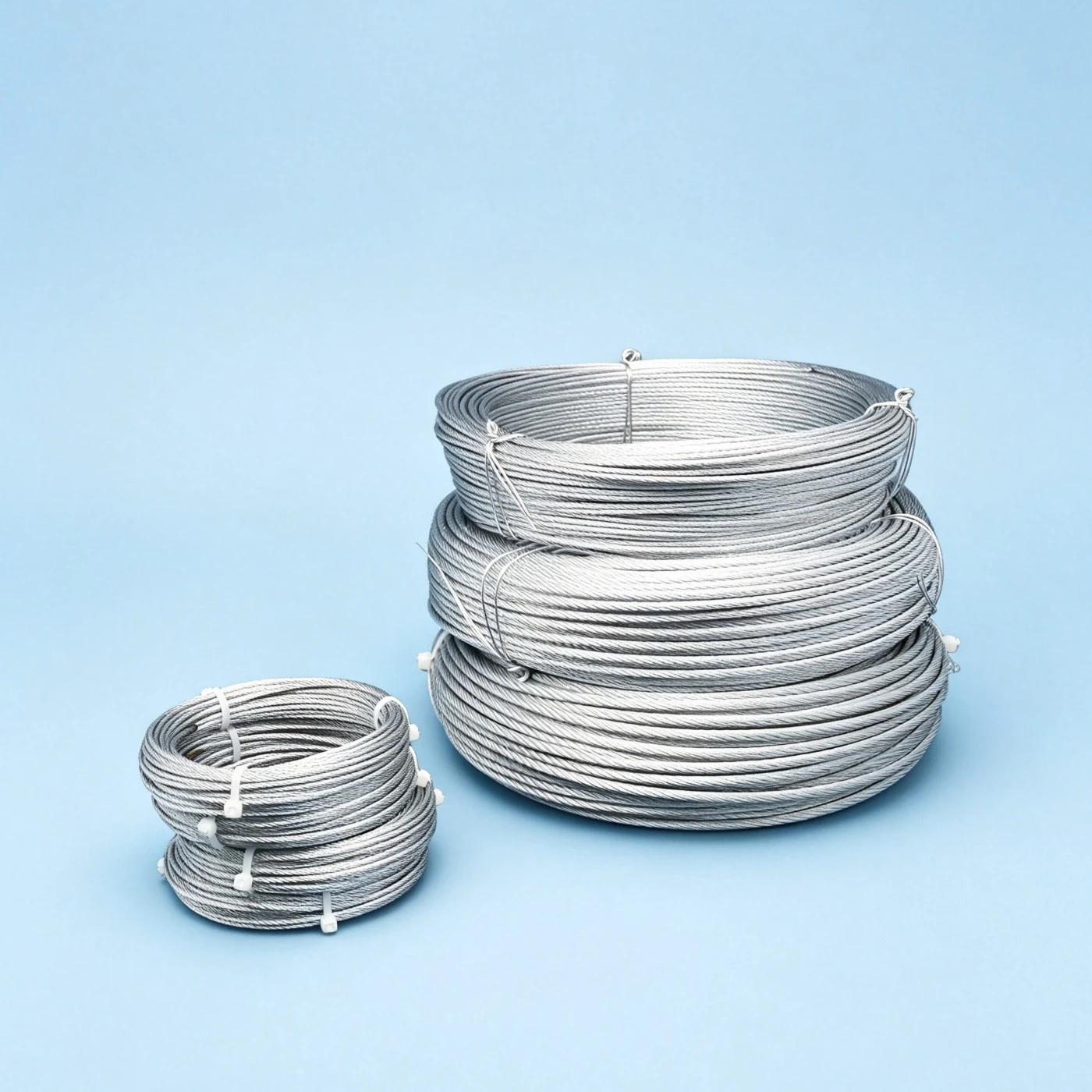
Some customers do not need one large industrial coil. Instead, they require multiple smaller coils with specific lengths, such as 15m, 25m, 50m, or 100m.
In this case, a large finished rope coil is fed into the cutting and rewinding process. The rope is measured and divided into smaller sections according to the customer's requirements.
The cutting process must be coordinated with length measurement, rewinding, end securing, and packaging.
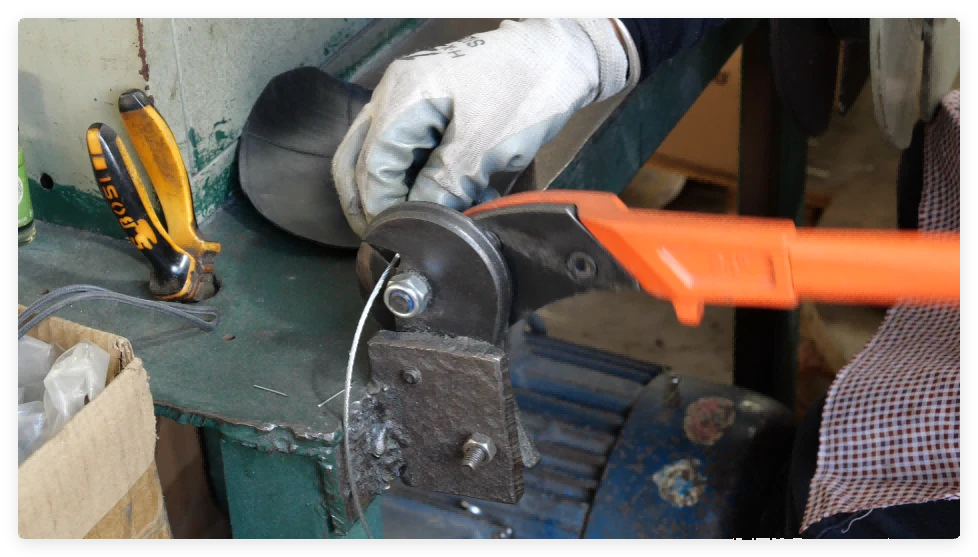
3. Common Tools and Equipment for Cutting Steel Wire Rope
The right cutting equipment depends on the rope diameter, construction, tensile strength, production volume, and required end condition.
01
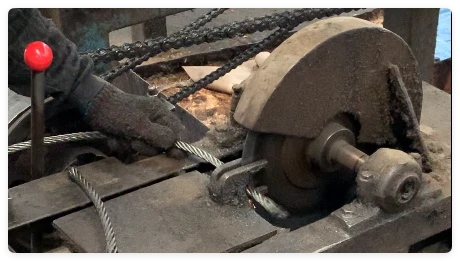
Abrasive Disc Cutting Machine
An abrasive disc cutter is commonly used for cutting steel wire ropes in manufacturing.
A high-speed abrasive disc can cut through the individual wires and strands to produce a relatively clean cross-section when the rope is properly secured and the equipment is suitable.
02
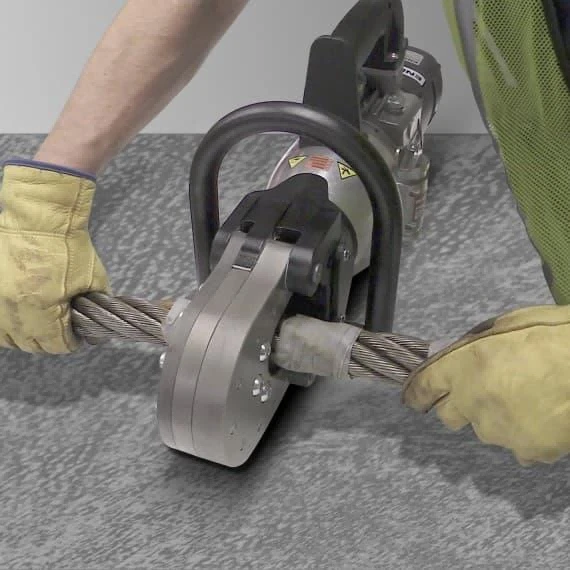
Hydraulic Wire Rope Cutter
Hydraulic cutting equipment uses high force to shear through the rope.
It can be useful for certain rope diameters and production requirements, provided that the cutter is designed for the specific rope construction and size.
03
Mechanical Wire Rope Cutter
Mechanical cutters are available for different rope sizes and applications. They may be suitable for smaller diameters or specific workshop operations.
The cutting capacity and blade design must match the rope's diameter and strength.
4. How to Cut Steel Wire Rope Correctly: A Step-by-Step Guide
The following is a general manufacturing workflow. The exact procedure should follow the rope manufacturer's production instructions, equipment requirements, and applicable safety procedures.
Step 1: Identify the Rope Specifications
Before cutting, confirm the rope's basic information:
Rope construction, such as 6×19, 6×37, or 8×19.
Nominal diameter.
Fiber core (FC) or independent wire rope core (IWRC).
Galvanized, ungalvanized, or stainless steel finish.
Required cutting length.
Special requirements for the rope ends.
Different constructions may behave differently during cutting. Rotation-resistant and parallel-closed ropes may require additional attention to end securing.
Step 2: Measure and Mark the Required Length
For large finished coils, identify the cutting position according to the production order.
For small-coil processing, measure the required length carefully before each cut.
A suitable measuring and length-control system helps reduce measurement errors, especially when processing large quantities of 15m, 25m, 50m, or 100m coils.
Step 3: Secure the Rope on Both Sides of the Cutting Point
This is one of the most important steps in wire rope cutting.
Before cutting, the rope should be properly secured on both sides of the intended cutting position. This process is commonly called seizing.
Seizing uses suitable binding wire or other approved securing methods to hold the strands in position and help prevent them from loosening during and after cutting.
The number, position, and length of the seizings depend on the rope construction and applicable procedures. Non-preformed, rotation-resistant, and parallel-closed ropes may require more securing than ordinary preformed ropes.
Step 4: Select the Appropriate Cutting Equipment
Choose an abrasive disc cutter, hydraulic cutter, or another suitable machine based on the rope diameter, construction, and production requirements.
Before operation, check the equipment condition, cutting capacity, guarding, and workpiece stability.
The rope must be properly supported and secured to prevent unwanted movement during cutting.
Step 5: Make the Cut
Once the rope has been secured and the cutting position confirmed, trained operators can carry out the cutting operation using the approved equipment.
The cutting process should aim to:
Keep the cutting line straight.
Avoid unnecessary deformation of the rope.
Prevent the strands from loosening.
Produce a suitable end condition for the next production stage.
For small-coil production, the cut length should be checked against the customer's order requirements.
Step 6: Inspect and Prepare the Rope Ends
After cutting, inspect the rope ends to check for loose strands, protruding wires, deformation, or excessive burrs.
Any further end treatment, such as welding or another securing method, should only be carried out when appropriate for the rope construction and product specification.
For ropes containing fiber or synthetic components, special care is required when selecting heat-based processes.
Step 7: Rewind and Package the Finished Rope
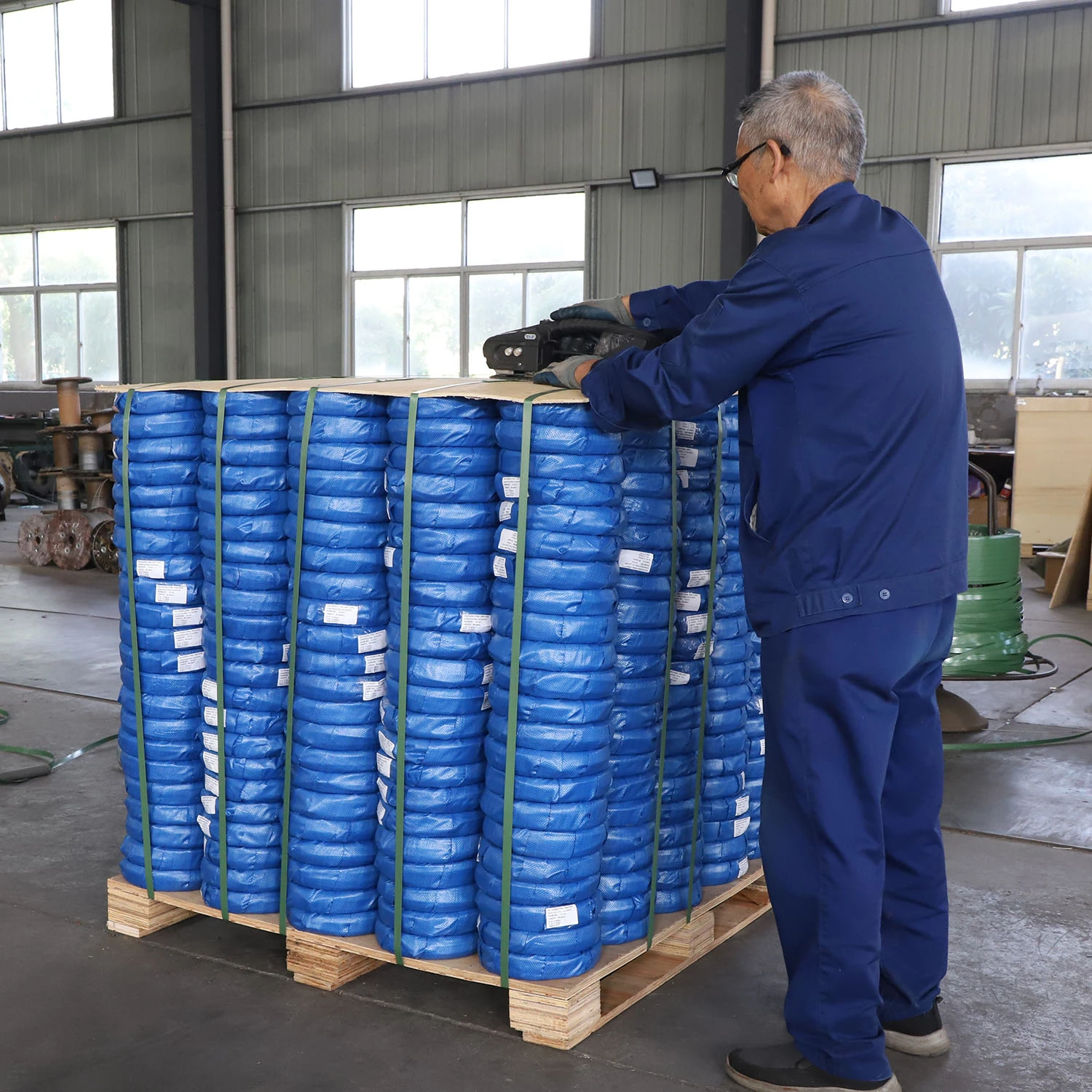
For large industrial coils, the cut rope can be prepared for the specified reel or packaging method.
For small-coil orders, the rope is measured, rewound, secured, and packed according to the customer's requirements.
Common packaging options include:
Plastic reels.
Wooden reels.
Small coils with ties.
Plastic bags.
Header cards and retail packaging.
Customized labels and cartons.
Accurate cutting and neat winding help ensure that the finished product is easier to store, transport, and use.
5. Common Mistakes to Avoid When Cutting Steel Wire Rope
Even in a professional workshop, incorrect cutting practices can cause unnecessary problems.
Cutting without securing the rope
Cutting without proper seizing may cause the strands to loosen or move out of position. Always follow the appropriate end-securing procedure.
Using unsuitable cutting equipment
A cutter with insufficient capacity may crush or deform the rope instead of producing a clean cut. Always match the equipment to the rope specifications.
Ignoring rope construction
Different constructions, especially rotation-resistant and multi-layer ropes, may need special cutting and end-securing procedures.
Measuring small coils inaccurately
Incorrect length measurement can result in products that do not meet the customer's order requirements. A reliable measuring system is important for batch production.
Ignoring the condition of the cut ends
Loose wires, sharp burrs, and distorted ends can create problems during handling, installation, and further processing. Inspect the ends after cutting.
Overlooking operator safety
Steel wire rope cutting involves sharp steel wires, high-force equipment, and potentially hot metal particles. Operators should use appropriate eye and hand protection, machine guards, and other required protective equipment. Cutting equipment should only be operated by trained personnel.
6. Customized Steel Wire Rope Lengths and Packaging from Shenwei
At Nantong Shenwei Steel Wire Rope Co., Ltd., we support customized steel wire rope specifications and packaging solutions.
why choose our products
Different customers have different requirements for steel wire rope lengths, coil sizes, and packaging.
Our product range includes:
We can discuss customized rope constructions, diameters, lengths, and packaging according to customer requirements.
Whether you need large industrial coils or small coils of 15m, 25m, 50m, and 100m, you are welcome to contact our team to discuss your order.
Conclusion
Cutting steel wire rope is an important step in both wire rope manufacturing and customized packaging. From cutting finished rope after the closing process to dividing large coils into multiple small lengths, proper preparation, suitable equipment, accurate measurement, and correct end securing all matter.
A well-managed cutting process helps maintain the rope's construction, achieve the required length, and prepare the product for safe handling and packaging.
Disclaimer: Cutting procedures and end-securing requirements vary according to rope construction, diameter, and application. Always follow the manufacturer's instructions and applicable safety standards.
Contact Us
If you are looking for a steel wire rope manufacturer that supports customized lengths and packaging, contact Nantong Shenwei Steel Wire Rope Co., Ltd. to discuss your requirements.
Phone Number
+86 13708399562
nt@sw-steelwirerope.com