Meta Description: Learn how to choose between rotating and non-rotating wire rope for cranes, hoists, and lifting equipment based on load stability, lifting height, and operating conditions.
1. When Should You Choose Rotating Wire Rope?
Conventional steel wire rope is often suitable for general lifting, winching, and industrial applications where some load rotation is acceptable or controlled by the lifting system.
It can be a practical option when the equipment is designed for this rope type and the load does not require strict rotational control.
2. When Should You Choose Non-Rotating Wire Rope?
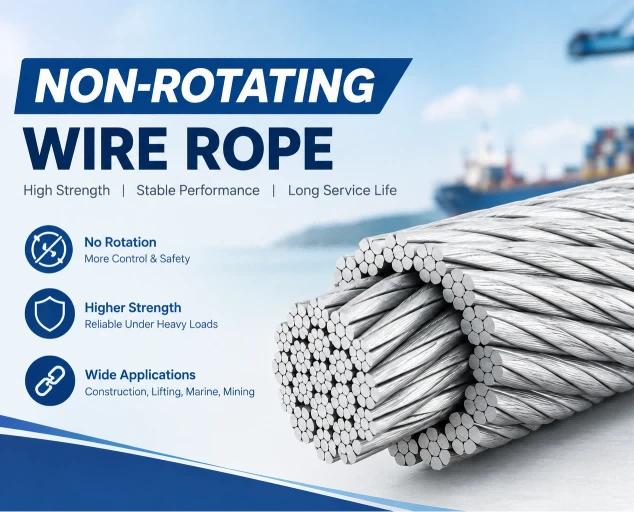
If a suspended load must remain stable, a rotation-resistant wire rope may be the better choice. It is especially useful for single-line hoisting, long lifting heights, and applications where uncontrolled load spinning can create operational risks.
Common constructions include 18×7, 19×7, and 35×7, but the correct type depends on the crane design and operating conditions.
3. Three Factors to Consider Before Buying
Lifting height: Longer free-hanging rope lengths can increase the tendency of a load to rotate.
Load stability: Choose a rope with suitable rotation resistance when load orientation matters.
Equipment compatibility: Check the required rope construction, diameter, minimum breaking force, drum, and sheave specifications.

4. Which Steel Wire Rope Is Right for Your Application?
There is no single best wire rope for every lifting task. Conventional rope may be suitable for some general lifting systems, while rotation-resistant wire rope can be important for high lifts and freely suspended loads.
Before purchasing crane wire rope or hoist wire rope, consult the equipment manufacturer or a qualified rope specialist. Always follow the specified rope type and applicable safety requirements.
Looking for a suitable steel wire rope? Contact our team with your required diameter, construction, rope length, and application to discuss a suitable option.