If you’ve ever stood on a dock watching a crane lower cargo into a flooded dry dock, or wondered how winch lines hold up in a saltwater aquarium exhibit, you’ve probably thought: can steel wire rope really handle a water-filled environment? As a steel wire rope supplier, I get this question all the time—from marine contractors to aquaculture operators to dam maintenance teams. The short answer is yes, but not all wire rope is made the same, and water doesn’t just affect how the rope works, it can change its entire lifespan if you pick the wrong type. Let’s break this down with real-world context, what science tells us, and which of our products fit best for wet applications.
First, let’s talk about why water is a big deal for steel wire rope. Steel and water don’t play nice together—exposure to moisture speeds up corrosion, which eats away at the individual steel wires that make up the rope, weakens the core that holds the structure together, and even causes small breaks that lead to full failure over time. But that doesn’t mean wire rope is off-limits for wet jobs. The key is choosing a rope engineered to resist or handle water’s impact, and understanding the difference between freshwater environments and saltwater (which has extra electrolytes that make corrosion even faster). Freshwater lakes, flooded construction sites, and water treatment plant lifts are less aggressive than saltwater docks, offshore rigs, or aquariums with saltwater, so your needs will shift based on exactly where the rope is being used.

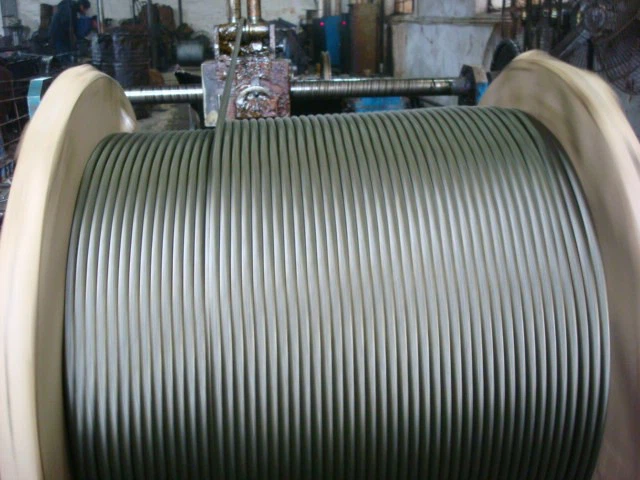
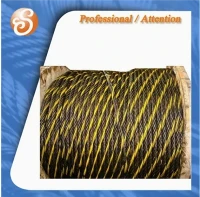
Let’s start with the most common mistake I see customers make: grabbing any wire rope off the shelf for a water job, assuming “steel is steel.” I had a customer a few years back who used a generic ungalvanized rope to lift materials into a flooded river construction zone, and within six months, half the outer wires had corroded through. The line snapped mid-lift, costing him thousands in damaged materials and downtime. That’s why matching the rope construction to the water environment is non-negotiable. For general freshwater applications—like lifting pumps in a water reservoir, or hoisting equipment above a flooded work area—there are solid options. Our 6x19+FC Ungalvanized Steel Wire Rope Wooden Reel is a go-to here. Wait, let’s clarify: ungalvanized doesn’t mean it will rust away instantly, but it’s got a raw steel finish that works well for freshwater where regular maintenance is possible. The FC stands for fiber core, which is flexible and holds lubricant well—something that’s extra important in wet environments, where lubrication can wash away if the rope isn’t sealed properly. We recommend this rope for jobs where you can periodically inspect and re-lubricate, since freshwater is less corrosive than saltwater.
For more demanding wet environments, like saltwater docks or offshore rigs, galvanized or stainless steel ropes are the way to go. Galvanization is a process where a thin layer of zinc is applied to the steel wires, acting as a barrier between the steel and water, and even sacrificing itself to corrode before the underlying steel does. Our 1x7 Galvanized Wire Rope 0.6mm-6mm might look small, but it’s actually perfect for smaller, precision jobs in wet areas—like securing lids on saltwater tanks, or holding small equipment lines on a boat. The compact construction means there’s less surface area exposed to water, and the zinc coating holds up well to intermittent saltwater exposure. For heavier industrial lifting in saltwater, our 8X19S Industrial Hoisting Wire Cable For Reliable And Safe is a workhorse. The 8X19S construction means it has eight strands, each with 19 wires, and a steel core (S stands for steel core) that gives it extra strength for heavy loads. The galvanized finish on this rope is thicker than the 1x7, designed for continuous or frequent saltwater exposure, like crane lines on a marina dock or winch lines on a fishing vessel. We’ve had customers use this rope for years on offshore supply ships, with only annual inspections needed to touch up zinc coating on any areas that get chipped from cargo.
Wait, but what about environments where water is constantly present, and you can’t perform regular maintenance? Like a permanent winch in a dam that’s always submerged, or a line holding an aquarium exhibit in place. For those jobs, stainless steel wire rope is the best bet. Our 6X19+FC Stainless Steel Wire Rope 1960N/mm2 is made from 316 stainless steel (the type best for marine environments, by the way) which has chromium and nickel alloys that resist corrosion far better than regular steel or even galvanized steel. The 1960 N/mm2 tensile strength means it can handle heavy loads without stretching, which is critical for permanent applications where you don’t want sag or failure. I had an aquarium customer use this rope to hold a 5,000-gallon saltwater tank in place, and they’ve had no issues in three years—no rust, no weakening, even with constant saltwater exposure. The fiber core in this model also helps absorb shocks, which is good for aquariums where the tank might shift slightly over time.
There’s a special case for water-filled environments that need non-rotating rope too. If you’re lifting large, awkward loads in a flooded area, rotating rope can spin the load, which is not only dangerous but can damage the rope itself as the wires twist. Our Building Use Non-rotating Steel Wire Rope 35Wx7+IWRC is perfect for these jobs. It has a steel core and a construction that prevents rotation, so even when lifting heavy pipes or equipment into a flooded construction trench, the load stays stable, and the rope doesn’t twist and break prematurely. We supplied this rope for a subway project in New York where they had to lift tunnel components through flooded sections, and it held up flawlessly for the six-month project.
Now, let’s talk about maintenance tips for wire rope in water-filled environments, because even the best rope won’t last forever if you don’t care for it. First, after every use in saltwater, rinse the rope with fresh water to wash away salt crystals—salt left on the surface will create tiny abrasions that let water get in and corrode the wires faster. For freshwater, a quick rinse every few months is enough, since freshwater doesn’t leave as many deposits. Second, re-lubricate the rope regularly, even galvanized or stainless models. Lubrication fills the gaps between the wires, keeping water out and reducing friction between individual wires, which causes wear over time. Third, inspect the rope monthly (weekly in heavy use) for frayed wires, broken strands, or any signs of corrosion. If you see small rust spots on galvanized rope, you can touch them up with zinc-based paint to stop further damage. For stainless rope, look for pitting—small holes in the metal—since that’s a sign corrosion is starting, even if you can’t see it yet.
I should also mention what a lot of people don’t realize: water doesn’t just cause corrosion, it affects the rope’s strength temporarily when it’s submerged. When wire rope is wet, the lubricant in the core can get washed out, and the steel wires can become slightly less flexible, which makes them harder to bend around winch sheaves. But that’s not a permanent loss of strength—once the rope dries out and is re-lubricated, it goes back to its rated capacity. The only permanent strength loss comes from corrosion, so that’s the main thing to watch out for.
Let me wrap this up with a quick story that sums it all up. Last year, a customer reached out panicking because their crane line for a marina lift had snapped in the middle of a saltwater season. They had used a generic ungalvanized rope they bought at a big box store, not realizing it wasn’t made for continuous water exposure. We supplied them with our 8X19S Industrial Hoisting Wire Cable For Reliable And Safe, and when they checked it six months later, there was barely any rust on it—just a small spot where a hook had scratched the zinc coating. They’ve reordered twice since then, and told us it’s the first rope they’ve used that hasn’t needed replacement every year.
At the end of the day, wire rope can absolutely be used in water-filled environments, but the success comes down to matching the right type of rope to your specific application. Whether you’re working with freshwater for construction, saltwater for marine jobs, or need a non-rotating line for permanent submerged use, we have options built to handle the conditions. If you’re not sure which rope is right for your water-based project, reach out to our team to discuss your needs. We’re always happy to help you pick a product that will last, keep your team safe, and get the job done right.
Reference:
- Steel Wire Rope Industry Association. (2021). Corrosion Resistance and Maintenance of Wire Ropes in Marine and Water-Filled Environments. Retrieved from industry association technical guidelines.
- American Society of Mechanical Engineers (ASME). (2019). Standard for Wire Rope Safety in Lifting Applications, Section 9: Environmental Exposure Considerations.
- International Organization for Standardization (ISO). (2020). ISO 4308: Cranes – Wire Ropes – Care and Maintenance.