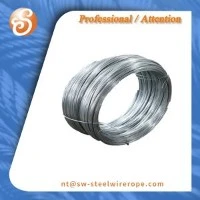
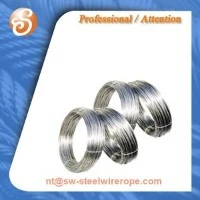
Hey everyone, as someone who’s been selling galvanized steel wire for over a decade, I get this question all the time: “Can galvanized steel wire be bent easily?” It’s not a yes or no answer, trust me—there’s way more to it than just grabbing a spool and trying to bend it like a paper clip. Let’s break this down, since I’ve seen customers mix up different types of galvanized wire all the time, and that confusion usually leads to problems.


First, let’s start with the basics: what even is galvanized steel wire? It’s regular steel wire that’s been coated with zinc to stop it from rusting—super important for outdoor stuff, fencing, agriculture, even building. But the way that zinc is applied makes a huge difference in how easy (or hard) it is to bend. I’ve got two main lines I sell: hot-dip galvanized and electric (electro) galvanized, and they’re night and day when it comes to bendability.
Let’s talk hot-dip first, because that’s the bulk of what I supply for heavy-duty jobs. Hot-dip means we dip the raw steel wire into a bath of molten zinc, so the zinc fuses really deep with the steel. This gives you a super thick zinc coating, which is perfect for things like farm fencing that’s exposed to rain, snow, and dirt year-round. Now, is this easy to bend? Wait—no, not if you’re trying to bend it without kinking or breaking, especially if it’s a thicker gauge. For example, our High-Tensile Hot-Dip Galvanized Steel Wire (1.0mm - 4.5mm) with Heavy Zinc Coating—this stuff is built for strength, so it’s higher tensile, which means it’s stiffer. If you try to bend a 4.5mm piece of this with your bare hands, you’re probably gonna hurt your wrist. But here’s the tradeoff: it bends without cracking or flaking the zinc if you use the right tools, like a pipe bender or a vise. If you bend it too sharply, sure, you might get a crease, but the zinc won’t fall off like it would with some cheaper wire. That’s why customers use this for things like trellises or heavy-duty cable ties—you need it to hold its shape once bent, not flop around.
Now, electric galvanized wire—let’s get specific, like our 2.5mm Electric Galvanized Steel Wire. This one’s coated by running electricity through the steel and zinc, so the zinc is thinner and more of a surface layer. Is this easier to bend? Yep, for smaller gauges. The 2.5mm is thinner than the hot-dip 4.5mm, and the zinc coating isn’t as fused, so it’s way more flexible. I’ve had homeowners pick up a spool of this for small projects—hanging lights, crafts, fixing a screen door—and they can bend it with just pliers, no heavy tools needed. But the catch here is that if you bend it too much (like multiple sharp bends back and forth), the thin zinc can start to chip. It’s not as durable long-term as hot-dip, so this is for indoor or low-exposure jobs, not outdoor fencing that’ll be out in the elements. I always tell customers: if bendability is your top priority for a small, indoor project, go electro. If it’s outdoor and you need the wire to last, hot-dip is the way to go, even if it’s a little stiffer.
Wait, there’s another type I sell that people don’t always think about when it comes to bending: galvanized spring steel wire. You can find that right here. Spring steel is made to bend and spring back, right? So is this easy to bend? It’s not like a plastic spring—you need a little force, but it’s designed for repeated bending without breaking. This is used for things like clothespins, screen springs, even some auto parts. If you try to bend it once, it’ll give a little, but if you bend it back and forth a bunch, eventually it’ll snap (that’s metal fatigue, for anyone who’s curious). It’s not “easy” to bend like a pipe cleaner, but it’s flexible enough for parts that need to move. I always warn people not to use spring wire for static bends (like fencing posts)—it’s meant for dynamic, not fixed, bends.
Now, let’s talk about gauges, because that’s a huge factor most new customers miss. Gauge is the wire’s thickness—lower number = thicker wire. So a 0.37mm wire is super thin, that’s our 0.37mm High Carbon Steel Wire, which is galvanized too. That stuff is like thread, almost—you can bend it with your fingers, it’s crazy flexible. It’s used for things like beading or tiny craft parts. But if you go up to a 4.5mm hot-dip, that’s way thicker, so it’s way harder to bend. Thinner wire = easier to bend, thicker = stiffer. Duh, right? But you’d be surprised how many people call up and ask for “wire that’s easy to bend” without saying what gauge they need, and then they’re shocked when the thick stuff is stiff.
Also, let’s not forget about tensile strength—especially for those working with fiber optic cables. We also sell High Tensile Steel Wire for Optical Fiber Cable Strength Member. That’s built to pull tight and hold shape, so it’s high tensile, which means it’s not easy to bend. At all. Because if you bend that too much, you could damage the fiber inside. So for that product, bendability is actually a downside, not a plus. It’s made to stay straight, not flex. That’s why it’s used as a strength member—so the cable doesn’t snap when it’s being pulled through walls or buried. So even though it’s galvanized, it’s not designed to be easy to bend at all. That’s a key point for anyone in telecom or networking—you don’t want a flexible strength member.
Let me share a quick story to drive this home. Last month, a farmer called me panicking because he ordered some wire for his new goat fencing, and it was way too stiff. He said he just needed something he could bend around fence posts with his hands, no tools. Turned out he ordered the high-tensile hot-dip I mentioned earlier, which is meant for heavy, permanent fencing. I swapped him for our electro-galvanized 2.0mm (thinner, more flexible) and he was stitched—said he bent it all day without breaking a sweat, and it’s holding up great. That’s the kind of mix-up I see all the time, so if you’re not sure, just tell me what you’re using the wire for, and I’ll hook you up with the right stuff.
Another thing: improper bending can damage the zinc coating, which defeats the whole purpose of galvanizing (preventing rust). If you bend any galvanized wire at a super sharp angle—like a 90-degree bend right around a tiny nail—you’ll likely get zinc cracking. That exposes the steel underneath, so it’ll start to rust over time. I always tell customers to use a radius bender if they need a tight bend, or at least a tool to distribute the pressure evenly, instead of pliers with a sharp edge. For example, if you’re bending hot-dip trellis wire, don’t just bend it around a small metal stake—use a pipe that’s a few inches wide to get a gentle curve, and the zinc will stay intact.
What about low vs high carbon? Wait, I mentioned the 0.37mm is high carbon, right? High carbon wire is stronger but less flexible than low carbon. So if you have a high carbon galvanized wire (like that 0.37mm), it’s a little stiffer than a low carbon wire of the same gauge. But that’s a tradeoff—high carbon is better for things that need to hold tension, like strings or supports. So even the thin high carbon one isn’t as “easy” to bend as a low carbon wire, but it’s still way easier than a thick hot-dip.
So to circle back to the original question: Can galvanized steel wire be bent easily? The short answer is: It depends. On how the zinc is coated (hot-dip vs electro), the gauge (thickness), the type of wire (spring, high tensile, etc.), and how sharp your bends are. If you need something flexible for small, low-exposure projects, go electro-galvanized in a smaller gauge. If you need durability and need to bend it without breaking the coating, go hot-dip, but expect it to be stiffer, especially in thicker gauges. If you need wire that bends and springs back, look for spring steel galvanized wire. And if you need high-tensile wire that won’t bend at all (like for fiber optic cables), that’s a whole different category.
Here’s the thing though—this is my line of work, so I’ve tested all these wires myself, and I know exactly what works for what. If you’re a DIYer looking for fencing, a contractor working on a building, a crafter, or someone in telecom, don’t guess which wire to get. Hit me up with your project details, and I’ll help you pick the right galvanized wire that’s either easy to bend or meets your needs—no guesswork, no headaches.
References
- American Galvanizers Association. (n.d.). "Galvanizing Fundamentals: Zinc Coating Types and Performance". Retrieved from aga.org
- Steel Wire Association International. (2021). "Tensile Strength and Bendability of Galvanized Steel Wire Products". Retrieved from steelwire.org
- Fiber optic cable manufacturing standards: TIA-568-C.2 (2015), "Standard for Telecommunications Cabling Standards". Retrieved from tiaonline.org## References
- American Galvanizers Association. (n.d.). Galvanizing Fundamentals: Zinc Coating Types and Performance.
- Steel Wire Association International. (2021). Tensile Strength and Bendability of Galvanized Steel Wire Products.
- Telecommunications Industry Association. (2015). TIA-568-C.2: Standard for Telecommunications Cabling.