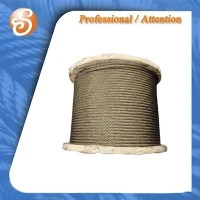
As a seasoned supplier of steel wire ropes, I've witnessed firsthand the importance of understanding the common defects that can occur in these essential products. Steel wire ropes are widely used in various industries, from construction and mining to shipping and transportation. Knowing the potential issues can help you make informed decisions when selecting and maintaining steel wire ropes. In this blog, I'll delve into the most common defects in steel wire ropes, explain their causes, and discuss how to prevent them.
External Wires Breakage
One of the most visible and concerning defects in steel wire ropes is external wire breakage. This occurs when individual wires on the outer surface of the rope snap. There are several reasons for this defect. Firstly, excessive tension is a common culprit. When a wire rope is subjected to a load beyond its rated capacity, the wires experience extreme stress, leading to breakage. For example, in a construction site where a wire rope is used to lift heavy building materials, overloading can cause the outer wires to snap.
Secondly, abrasion plays a significant role. When a wire rope rubs against rough surfaces, such as sharp edges of machinery or uneven terrain, the outer wires gradually wear down. Eventually, the weakened wires break. In mining operations, where wire ropes are constantly in contact with rough rock surfaces, abrasion - induced wire breakage is quite common.
Preventing external wire breakage involves proper load management. Always ensure that you are using a wire rope with a suitable rating for the intended load. Additionally, using protective sleeves or guides can reduce abrasion. For example, when using our 1X7 304/316 Stainless Steel Wire Rope for Industrial Applications, it's important to follow these practices to extend its lifespan.


Corrosion
Corrosion is another prevalent defect in steel wire ropes. Steel is prone to rust when exposed to moisture, oxygen, and certain chemicals. In marine environments, for instance, the high salt content in the air and water accelerates the corrosion process. When a wire rope corrodes, the metal loses its strength and integrity. The corroded areas become weak points, increasing the risk of failure.
Corrosion can also occur in industrial settings where there are chemical spills or high humidity levels. For example, in a chemical plant, if a wire rope comes into contact with corrosive substances, it can quickly start to corrode.
To prevent corrosion, applying a protective coating is crucial. Galvanized steel wire ropes are a popular choice as the zinc coating acts as a sacrificial layer, protecting the steel beneath. Our Suitable For Cargo Net Galvanized 6X24+7FC ISO Standard is galvanized to provide excellent corrosion resistance. Regular inspection and maintenance, including cleaning and re - applying protective coatings if necessary, can also help to prevent corrosion.
Internal Wear and Damage
Internal wear and damage in steel wire ropes are often more difficult to detect than external defects but can be just as dangerous. This type of defect occurs when the individual wires inside the rope rub against each other. It is commonly caused by improper installation or operation. For example, if a wire rope is not properly lubricated, the friction between the internal wires increases, leading to wear.
In addition, misalignment of sheaves or drums can cause uneven distribution of stress within the rope, resulting in internal damage. When a wire rope is used in a hoisting system, if the sheaves are not aligned correctly, the rope may twist and turn in an abnormal way, causing internal wires to wear against each other.
Preventing internal wear requires proper installation and maintenance. Ensure that the wire rope is installed according to the manufacturer's instructions. Regular lubrication is essential to reduce friction between the internal wires. Our 1960n/mm2 Steel Wire Cable For Industrial Lifting Applications 8X19s benefits from proper lubrication to minimize internal wear.
Kinking
Kinking is a defect that occurs when a wire rope forms a sharp bend or loop. This can happen during installation, handling, or operation. Kinking can significantly reduce the strength of the wire rope. When a kink forms, the wires are deformed, and the stress is concentrated in the kinked area. As a result, the rope is more likely to break under load.
Kinking is often caused by improper coiling or uncoiling of the wire rope. For example, if a wire rope is coiled too tightly or uncoiled in a haphazard manner, kinks can form. In addition, sudden stops or jerks during operation can also cause kinking.
To prevent kinking, it's important to handle the wire rope properly during installation and use. Use correct coiling and uncoiling techniques. When using the rope in a dynamic application, ensure smooth start - up and stop procedures. Our Steel Wire Rope With High Quality Zinc Coating 6X12+7FC can perform better when kinking is avoided.
Fatigue
Fatigue is a long - term defect that occurs when a wire rope is subjected to repeated loading and unloading cycles. Over time, the material of the wire rope weakens due to the cyclic stress. The wires develop micro - cracks, which gradually grow until the rope fails.
In applications such as elevators or cranes, where the wire rope is constantly being loaded and unloaded, fatigue is a major concern. The frequency and magnitude of the load cycles, as well as the design of the rope, all affect the fatigue life of the wire rope.
To improve fatigue resistance, choose a wire rope with a suitable construction and material. High - strength steel ropes are generally more resistant to fatigue. Our High - Strength Galvanized Steel Wire For Elevators 6x29Fi+FC is designed to withstand high - frequency loading and unloading cycles, making it suitable for elevator applications.
Conclusion
In conclusion, being aware of the common defects in steel wire ropes is essential for anyone involved in their selection, use, and maintenance. External wire breakage, corrosion, internal wear and damage, kinking, and fatigue are the most common issues. By understanding the causes of these defects, you can take appropriate measures to prevent them and ensure the safe and efficient operation of your steel wire ropes.
If you're in the market for high - quality steel wire ropes, we're here to help. We offer a wide range of products to meet your specific needs. Whether you need a stainless - steel rope for industrial applications or a galvanized rope for cargo nets, we have the right solution for you. Contact us to discuss your requirements and start a procurement negotiation.
References
- Machinery's Handbook, 31st Edition
- ASTM International Standards for Steel Wire Ropes
- Manufacturer's guidelines for steel wire rope installation and maintenance