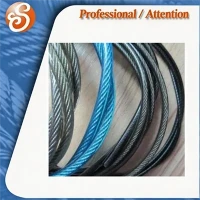
Hey there! If you’ve ever bought PE coated steel wire rope for a project—whether it’s a backyard fence, a boat dock, gym equipment, or even a playground swing—you’ve probably wondered the same thing: how long does this stuff actually last? As someone who’s been in the PE coated steel wire rope game for years, I get it. No one wants to shell out money for a product that’ll fray, rust, or break after a few months of use. Today, I’m breaking down the real lifespan of PE coated steel wire rope, what affects it, and how you can make yours last as long as possible.
First off, let’s make sure we’re on the same page: PE (polyethylene) coated steel wire rope is different from PVC coated. Wait, I know I’ve had customers mix them up before, so let’s clarify quick. PE coating is the outer layer that gives that smooth, flexible, UV-resistant finish you see a lot in outdoor applications, while PVC is another common coating, often used for indoor or mild outdoor jobs. If you’re curious about PVC coated options, we’ve got a ton of those too—like this PVC Coated 6x37+IWRC Steel Wire Rope that’s super popular for heavy-duty lifting and marine work. But back to PE coated—its main job is protecting the underlying steel core from the elements, right? So its lifespan depends on how well that coating holds up, plus a few other key factors.
Let’s start with the basics: what’s the average lifespan of PE coated steel wire rope? Honestly, it’s not a one-size-fits-all number. I’ve seen some last 5+ years, others only 18 months—depends on where you’re using it, how you maintain it, and what grade of rope you buy. Let’s get into the biggest variables that change this.
First, environment. This is the #1 factor by far. If you’re using PE coated rope in a dry, sheltered space—like an indoor garage hoist, or a covered balcony for hanging plants—it’s gonna last way longer than if it’s out in the open, exposed to sun, rain, saltwater, or extreme temps. UV rays are PE’s kryptonite, y’all. Over time, sunlight breaks down the polyethylene coating, making it brittle, cracking, and peeling away from the steel core. Once that coating fails, the steel is exposed to moisture and rust, which eats away at the wires from the inside. I had a customer a few years ago who used a cheap PE rope for his lake dock—by the end of the first summer, the coating was already cracking from the constant sun and salt spray, and the steel core started rusting through. On the flip side, another customer uses our PE coated rope for a backyard fence that’s mostly shaded, and it’s been going strong for 7 years now. That’s a huge difference just from location.
Then there’s the type of PE coating. Not all PE is created equal. We use high-density PE (HDPE) for most of our ropes, which is way more durable and UV-resistant than low-density PE (LDPE) that some cheaper brands cut corners with. HDPE stands up better to scratches, abrasion, and UV exposure, so it adds years to the lifespan. If you’ve ever felt a flimsy PE rope that scratches easy, that’s LDPE—avoid that if you want longevity. We also offer a range of constructions, like the 7X19 PVC/PP/PE/PA Coated Steel Wire Rope, 1/32" -5/16′′ which is built for flexibility and resistance to both wear and environmental factors. The construction of the wire core matters too—for example, our 6x19Fi+IWRC steel core is way stronger and more resistant to bending fatigue than smaller core constructions, so it won’t break as quickly under regular use.
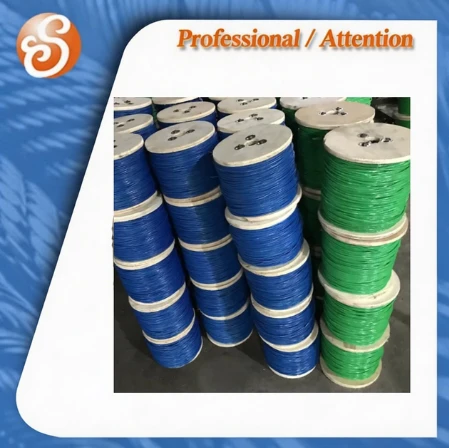

Next up, how you use and maintain the rope. Even the best PE coated rope won’t last if you’re misusing it. Let’s talk about load: if you exceed the working load limit of the rope, you’re putting extra stress on the steel wires, which can cause them to stretch, fray, or break prematurely. Always check the load rating before you tie that swing or lift that engine— that’s a quick way to avoid shortening your rope’s life. Then there’s abrasion. If your rope is rubbing against a sharp edge (like a rough metal beam or a rocky dock), the PE coating will wear away fast, exposing the steel. We always tell customers to add protective sleeves or padding to areas where the rope moves over hard surfaces. And maintenance? It’s simpler than you think. Wipe down your rope every few months to get rid of dirt, salt, or debris that can scratch the coating or hold moisture. If you spot a small scratch or tear in the PE layer, you can use a waterproof sealant to patch it up before rust gets in—trust me, that little step adds months, if not years, to the life.
Wait, also—what about indoor use? If you’re using PE coated rope for gym equipment, or a garage pulley system, the lifespan is way different. No UV, no salt, no extreme temp swings—most of these last 10+ years, sometimes even longer if they’re not overloaded. I had one gym client who’s been using our PE coated rope for their cable machine for 12 years now, and it’s still going strong—no cracks, no rust, no frayed wires. Compare that to a marine application, where saltwater and sun can take a toll in 2-3 years. That’s why it’s so important to match the rope to the job. If you need something for a harsh outdoor environment, don’t skimp on quality—cheap PE rope might seem like a deal, but you’ll be replacing it way sooner.
Let me bust a common myth here: some people think the only thing that matters is the coating, but the steel core is super important too. If the core is low-grade, like regular steel instead of galvanized steel, it’ll rust way faster once the coating is damaged. We offer galvanized core options too, like our 1X19 Galvanized PVC Coated Steel Wire Rope — wait, no, for PE coated, we have galvanized cores too, which add an extra layer of rust protection. That’s a big deal for anyone using the rope near water or in humid climates.
Now, let’s get into real-world scenarios to make this concrete (pun intended). Let’s say you’re using PE coated rope for a playground swing: that’s going to get sun, rain, and kid play (so some abrasion from moving). A high-quality HDPE coated rope with a galvanized core, used correctly, will last 3-5 years. If you skimp and buy a cheap, thin PE rope, it’ll last maybe 12-18 months before the coating cracks and the steel rusts. Another scenario: boat dock lines in a coastal area with lots of salt spray. Again, high-quality PE coated (with UV stabilizers, which we add to all our PE coatings) and galvanized core will last 2-4 years. If you’re in a mild, inland area with only occasional rain, that same rope could last 5-7 years. Indoors, as I mentioned, can be a decade or more.
What about signs that your PE coated rope is nearing the end of its lifespan? Don’t wait for it to break—look for these red flags: cracks or peeling in the PE coating, rust spots showing through the coating, frayed individual steel wires sticking out, or the rope feeling stiff instead of flexible (that’s a sign the core is rusting or the wires are fatigued). If you see any of these, replace it immediately—don’t risk a safety hazard.
Now, as a supplier, I always tell customers that investing in a high-quality PE coated steel wire rope is way more cost-effective in the long run. Yeah, it might cost a few bucks more upfront, but you won’t have to replace it every year or two. We’ve been supplying these ropes for years, and we’ve seen time and time again that the ones from our China Manufacture 7X7 PVC Coated Steel Wire Rope 2mm-3mm line—wait, that’s PVC, but our PE coated equivalents are made with the same attention to quality, no shortcuts. We use HDPE coatings with UV stabilizers, galvanized or high-tensile steel cores, and precision construction to make sure our ropes hold up whatever you throw at them.
Wait, let’s circle back to that original question: what’s the lifespan of PE coated steel wire rope? The short answer is: 2 to 10+ years, depending on environment, coating quality, usage, and maintenance. The long answer is that you can maximize that lifespan by doing a few simple things: pick the right rope for your application (outdoor? Get UV-resistant HDPE; near water? Get galvanized core), avoid overloading it, keep it away from sharp edges, and do basic wipe-downs and inspections every few months.
If you’re in the market for PE coated steel wire rope, or even PVC coated options like the 6x19Fi+IWRC PVC Coated Steel Wire Rope 2mm that’s perfect for small projects, I’m here to help. Don’t hesitate to reach out if you have questions about which rope is right for your job—we’re not just suppliers, we’re people who use this stuff too, so we can give you honest, no-BS advice.
Reference:
- National Association of Corrosion Engineers (NACE) International. "Coated Steel Wire Rope Durability in Outdoor Environments." 2021.
- American Society of Mechanical Engineers (ASME). "Wire Rope Safety Standards for General Applications." 2019.
- International Organization for Standardization (ISO). "Steel Wire Ropes – Characteristics, Testing, and Classification." ISO 2408:2017.