Introduction
Elevator wire rope is a key component of elevator traction and hoisting systems. The rope construction and core type can influence its breaking strength, elongation behavior, flexibility, and cross-sectional stability during operation.
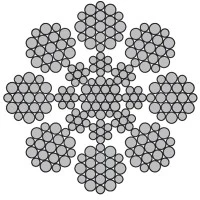
Among specialized elevator wire ropes, 8x19W+8x7+FC and 8x19W+8x7+1x19W are two constructions worth understanding. Both feature an 8x19 Warrington outer strand arrangement, but they differ in their core structures.
In this article, Nantong Shenwei Steel Wire Rope introduces the main characteristics of these two elevator wire ropes and explains the factors buyers should consider when selecting a suitable construction.
1. What Is 8x19W+8x7+FC Elevator Wire Rope?
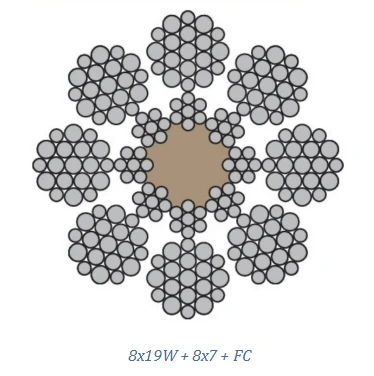
The 8x19W+8x7+FC elevator wire rope features eight outer strands with a Warrington construction and a steel-reinforced fiber core.
Unlike a conventional fiber-core rope, this design incorporates additional steel strands around the fiber center. The reinforced core increases the metallic cross-sectional area and helps improve breaking strength and resistance to cross-sectional deformation.
Key Features
Steel-reinforced fiber core: Combines steel reinforcement with a fiber center.
Higher breaking strength: Offers greater breaking strength than standard fiber-core constructions, according to the supplied product specification.
Cross-sectional stability: Helps maintain the rope's shape as it passes over traction and deflection sheaves.
Elongation characteristics: The fiber component provides cushioning and elongation behavior that can be useful in suitable elevator systems.
Typical Applications
This construction may be considered for elevator traction systems requiring a balance of strength, flexibility, and shape stability. Potential applications include low- to medium-rise passenger and freight elevators and installations with deflection sheaves.
The final selection should always follow the elevator manufacturer's requirements and the system's design specifications.
2. What Is 8x19W+8x7+1x19W Full Steel Core Elevator Wire Rope?
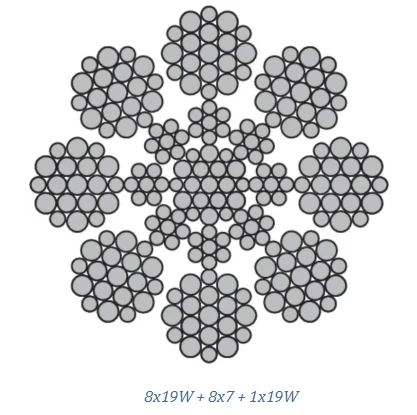
The 8x19W+8x7+1x19W elevator wire rope is developed from the steel-reinforced fiber-core design. In this construction, the fiber component in the reinforced core is replaced with a steel strand, creating a full steel core structure, also known as an independent wire rope core (IWRC).
The additional steel content increases the metallic cross-sectional area and minimum breaking load. The full steel core also helps reduce structural elongation, making this construction a potential option for applications with demanding load and elongation requirements.
Key Features
Full steel core: Uses a steel strand instead of the fiber center in the reinforced core.
Higher minimum breaking load: Provides higher specified minimum breaking loads than the corresponding fiber-reinforced version in the supplied data.
Lower structural elongation: Helps reduce rope stretch under load.
Designed for demanding service conditions: Can be considered for medium- and high-rise elevator systems with frequent bending cycles, subject to system requirements.
Typical Applications
This construction may be suitable for selected medium- and high-rise passenger or freight elevators, heavy-duty commercial lifts, and specialized elevator systems requiring low elongation and higher breaking strength.
Actual suitability depends on factors such as elevator speed, building height, traction sheave design, bending conditions, and the elevator manufacturer's approval.
3. Main Differences Between the Two Elevator Wire Ropes
Although both products share an 8x19W outer construction, the different core designs result in different performance characteristics.
| Feature | 8x19W+8x7+FC | 8x19W+8x7+1x19W |
|---|---|---|
| Core type | Steel-reinforced fiber core | Full steel core (IWRC) |
| Center component | Fiber center | Steel strand center |
| Metallic cross-section | Lower of the two designs | Higher of the two designs |
| Minimum breaking load | Lower at corresponding listed sizes | Higher at corresponding listed sizes |
| Structural elongation | Fiber-core elongation behavior | Lower structural elongation |
| Selection focus | Strength with fiber-core cushioning characteristics | Higher breaking load and reduced stretch |
Neither construction is automatically the right choice for every elevator. The best option depends on the complete elevator system and its technical requirements.

4. Technical Specifications and Available Options
According to the supplied Shenwei product specifications, both constructions feature the following technical characteristics:
Rope construction: 8x19 Warrington with a reinforced core
Tensile grade: 1570 N/mm²
Technical references: DIN EN 12385 and ISO 4344
Steel wire finish: Bright (ungalvanized) or galvanized
Lay direction: Right-hand or left-hand regular lay
Nominal diameter range: 8–20 mm, with specific sizes available according to the product data tables
Customization: Metric and inch sizes, rope specifications, surface finish, and packaging can be discussed according to project requirements
The minimum breaking load and calculated mass vary with rope diameter and construction. Buyers should consult the relevant technical data table for the exact size rather than applying one value to the entire product range.
5. How to Choose the Right Elevator Wire Rope
Before ordering an elevator wire rope, consider these factors:
1. Elevator design requirements
Confirm the required rope construction, nominal diameter, tensile grade, and core type with the elevator manufacturer.
2. Minimum breaking load
Check the specified minimum breaking load for the exact diameter and construction. The rope must meet the requirements of the complete elevator system.
3. Elongation and bending conditions
If reduced structural elongation is a priority, the full steel core construction may be worth evaluating. If the application benefits from the cushioning characteristics of a reinforced fiber core, the hybrid construction may be considered.
4. Sheaves and operating conditions
Traction sheave dimensions, deflection sheaves, bending cycles, elevator speed, and building height all influence rope selection.
5. Surface finish and supply requirements
Specify whether bright or galvanized wire is required, along with rope length, dimensional requirements, and packaging preferences.
Always verify the final rope selection against the applicable standards, elevator design, and manufacturer's specifications.

6. Why Choose Nantong Shenwei Steel Wire Rope?
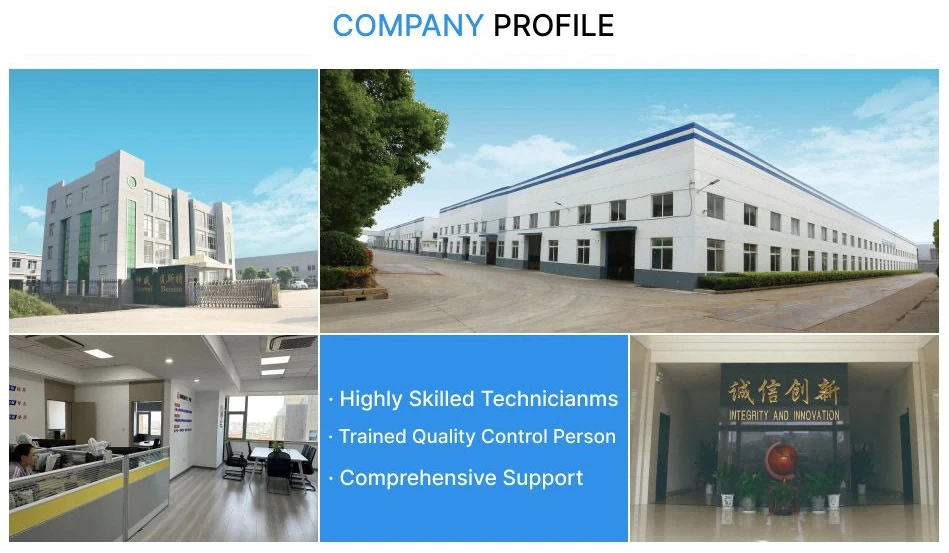
Nantong Shenwei Steel Wire Rope Co., Ltd. specializes in steel wire rope manufacturing and supplies products for a range of industrial applications, including elevator systems.
We offer elevator wire rope options with different core constructions, diameters, and surface finishes. Our team can discuss product specifications and customized supply requirements to help buyers identify a suitable solution for their projects.
Whether you are sourcing steel-reinforced fiber-core elevator wire rope or full steel-core elevator wire rope, we welcome inquiries from elevator manufacturers, distributors, and industrial buyers.
Conclusion
The main difference between 8x19W+8x7+FC and 8x19W+8x7+1x19W lies in the core structure. The first combines steel reinforcement with a fiber center, while the second uses a full steel core to achieve a higher metallic cross-sectional area, higher specified breaking load, and lower structural elongation.
Understanding these differences helps buyers discuss their requirements more effectively and narrow down suitable elevator wire rope options.
Contact Nantong Shenwei Steel Wire Rope Co., Ltd.
Website: https://www.shenwei-steelwirerope.com/
Email: nt@sw-steelwirerope.com
WhatsApp: +86 13708399562
Contact us with your required diameter, construction, core type, and application to discuss suitable elevator wire rope specifications.