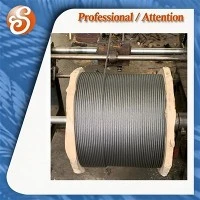
Meta Description: Learn the differences between non-rotating and rotating wire rope, including construction, torque resistance, applications, and how to choose the right steel wire rope.
What Is Rotating Wire Rope?
Rotating wire rope is a conventional steel wire rope that may twist when tension is applied. Its rotation depends on the rope construction, load, lifting height, and operating conditions. Common multi-strand constructions, such as 6-strand ropes, are widely used in general lifting, winching, and industrial applications.

What Is Non-Rotating Wire Rope?
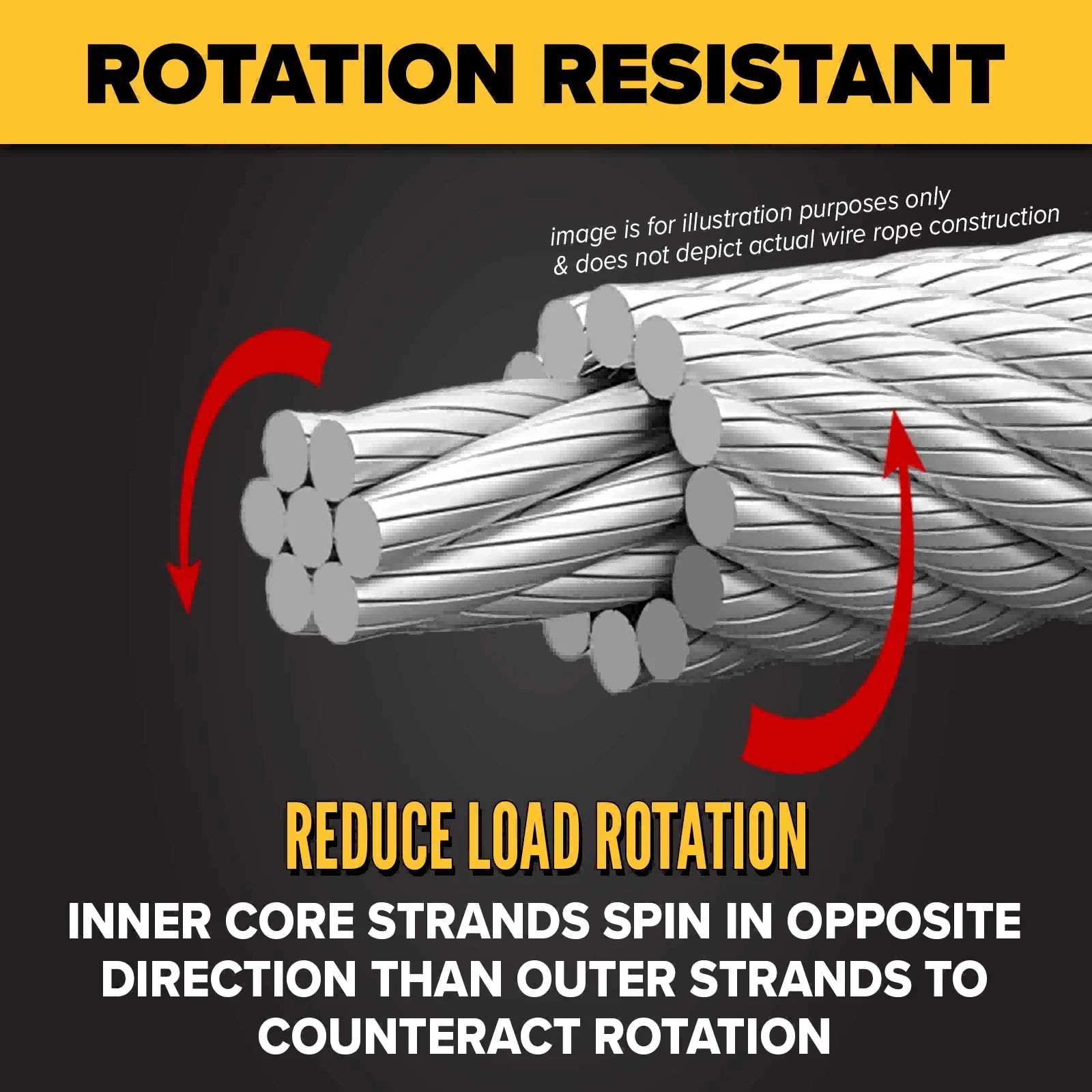
Non-rotating wire rope, also known as rotation-resistant wire rope, is designed to reduce twisting and torque under load. Its inner and outer strand layers are laid in opposite directions, helping balance rotational forces.
Common constructions include 18×7, 19×7, and 35×7 steel wire rope. These ropes are often used in crane hoists and lifting applications where load stability is important.

Key Differences Between Rotating and Non-Rotating Wire Rope
| Feature | Rotating Wire Rope | Non-Rotating Wire Rope |
|---|---|---|
| Rotation resistance | Generally lower | Higher |
| Construction | Commonly a conventional strand arrangement | Multiple layers designed to balance torque |
| Load behavior | May cause the load to spin | Helps reduce load rotation |
| Typical applications | General lifting and winching | Crane hoists and lifting with greater rotation-control needs |
How to Choose the Right Steel Wire Rope
When selecting steel wire rope, consider the lifting height, load weight, reeving system, drum and sheave compatibility, and the risk of load rotation.
For applications requiring better rotation resistance, 19×7 or 35×7 non-rotating wire rope may be suitable options. For general lifting, a conventional steel wire rope may be appropriate when rotation is acceptable.
Always follow the crane or equipment manufacturer's specifications. No wire rope is completely rotation-free under every operating condition, so correct selection, installation, and inspection are essential.
Conclusion
The main difference between rotating and non-rotating wire rope is how each construction responds to torque under load. Choosing the right steel wire rope for cranes and hoisting equipment helps support stable lifting and reliable operation.