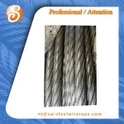
Picture this: you're lifting a long, heavy pipe or a tall piece of machinery. You hook it up, start the lift, and the load begins to spin uncontrollably. That's the difference between rotating and non-rotating wire rope in action. It comes down to how the rope is built.
Standard rotating wire rope is made in a single direction. When you lift a heavy weight, the rope naturally wants to twist or unwind. This can cause your load to spin, which is dangerous and hard to control. It's like the tension you feel in a coiled phone cord. Non-rotating wire rope, often called "rotation-resistant," is built differently. It has multiple layers of strands laid in opposite directions. These layers balance each other out. When under tension, the rope resists spinning. The load stays steady and stable.
Choosing the wrong type costs you time and creates a hazard. For a simple, single-line lift of a compact item, a standard rotating rope might be fine. But for anything long, tall, or awkward where control is critical, you need a non-rotating rope. It prevents dangerous spin and gives the operator better command. This isn't an upgrade; it's the right tool for a specific job. Our range includes both types, with clear labels and working load limits, so you know exactly what you're getting for your dollars.
Understand your lift before you choose your rope. Need to keep a load steady and balanced? Ask us about non-rotating wire rope. Visit our yard or call our team today for a straight answer on which type you need. Let's make your next lift safe and stable.