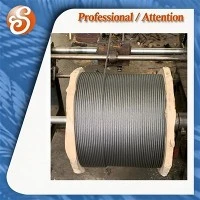
1. Structure and Material
Fibre Core (FC/FC):
The core is made of natural fibres (e.g., sisal) or synthetic fibres, which are soft and can store oil to lubricate the steel wires.
Steel Core (IWRC/IWR):
The core consists of steel wires or strands (e.g., independent wire rope core), featuring high strength and rigidity.
2. Performance Differences
| Aspect | Fibre Core Wire Rope | Steel Core Wire Rope |
|---|---|---|
| Flexibility | Excellent, easy to bend, suitable for small pulleys | Poor flexibility, requires larger bending radius |
| High-Temperature Resistance | Poor (fibres prone to carbonization) | Excellent (steel wires withstand high temperatures) |
| Load Capacity | Lower, suitable for light-to-medium loads | Higher, ideal for heavy lifting, mining, etc. |
| Crush Resistance | Poor, prone to deformation under pressure | Excellent, strong resistance to extrusion and impact |
| Self-Weight | Light, reduces equipment load | Heavy, increases mechanical operating load |
3. Typical Application Scenarios
Fibre Core: Elevator counterweight cables, crane luffing ropes, civil lifting (requiring flexible bending).
Steel Core: Port cranes, mine hoisting, bridge stay cables (requiring high strength and stability).
Conclusion: Fibre cores prioritize flexibility and cost, while steel cores emphasize strength and durability. Selection should consider working conditions, load characteristics, environmental temperature, and equipment compatibility.