Introduction
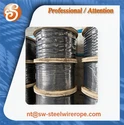
Ungalvanized steel wire rope, also known as bright wire rope or uncoated steel wire rope, is manufactured from high-carbon steel wires without a zinc coating. It is widely used in lifting equipment, cranes, winches, mining machinery, industrial equipment, and other applications where corrosion exposure is controlled.
Unlike galvanized steel wire rope, ungalvanized wire rope does not have a protective zinc layer. However, with proper lubrication, storage, inspection, and maintenance, it can provide excellent strength, durability, and reliable performance in many industrial applications.
Understanding its characteristics and applications can help buyers choose the right wire rope for their specific working conditions.

What Is Ungalvanized Steel Wire Rope?
Ungalvanized steel wire rope is a type of wire rope manufactured from steel wires without a galvanized zinc coating. It is also commonly called bright steel wire rope, bright wire rope, or uncoated wire rope.
The steel wires are twisted into strands, and the strands are then laid together around a core to form the finished rope.
Common constructions include:
6×7
6×19
6×36
8×19
18×7
6×37
Different core options are also available, such as:
FC – Fiber Core
IWRC – Independent Wire Rope Core
WSC – Wire Strand Core
The choice of construction and core depends on the required flexibility, strength, abrasion resistance, crushing resistance, and operating conditions.

Key Benefits of Ungalvanized Steel Wire Rope
1. High Strength
Ungalvanized steel wire rope can provide excellent tensile strength and load-bearing performance.
Depending on the rope diameter, construction, core, and tensile strength grade, bright wire rope can be manufactured for a wide range of lifting and industrial applications.
For heavy-duty applications, buyers can select suitable high-strength grades according to the required minimum breaking force and applicable standards.
2. Good Wear Resistance
Certain ungalvanized wire rope constructions provide excellent resistance to abrasion.
For example, constructions with larger outer wires can be suitable for applications where the rope experiences significant contact with sheaves, drums, or other equipment components.
The correct construction should always be selected according to the actual working conditions.
3. Smooth Surface
Without a zinc coating, ungalvanized wire rope has a clean metallic surface.
With proper lubrication, the rope can operate smoothly over sheaves and drums while reducing friction between individual wires and strands.
Proper lubrication is particularly important for maintaining the performance and service life of ungalvanized wire rope.
4. Wide Range of Constructions
One important advantage of ungalvanized steel wire rope is the availability of many different constructions.
For example:
6×19 provides a good balance between strength and abrasion resistance.
6×36 generally offers greater flexibility and is suitable for applications involving repeated bending.
8×19 constructions are commonly used in lifting and machinery applications where flexibility is important.
This wide range allows buyers to select a rope according to their specific equipment and working conditions.
5. Cost-Effective Solution
Ungalvanized steel wire rope is often an economical option for applications where high corrosion resistance is not the primary requirement.
For indoor equipment and controlled industrial environments, it can provide a practical combination of mechanical performance and cost efficiency.

Applications of Ungalvanized Steel Wire Rope
1. Cranes and Hoisting Equipment
Ungalvanized wire rope can be used in certain crane and hoisting applications, particularly in indoor or controlled environments.
Typical applications include:
Overhead cranes
Workshop cranes
Hoists
Lifting equipment
Industrial machinery
The rope construction should be selected according to the crane design, load, sheave dimensions, drum configuration, and operating frequency.
2. Industrial Winches
Ungalvanized wire rope is widely used in various winching applications.
It can be used for:
Industrial winches
Pulling equipment
Material handling systems
Machinery winches
Heavy-duty lifting systems
The appropriate rope construction and core should be selected according to the expected load and bending conditions.
3. Mining Equipment
Certain mining applications use ungalvanized steel wire rope where proper lubrication and maintenance are available.
Depending on the equipment design, wire ropes may be used for:
Hoisting
Material handling
Winches
Lifting systems
Industrial transportation equipment
For mining applications, factors such as fatigue resistance, abrasion resistance, breaking force, and rope construction should be carefully evaluated.
4. Dredging and Heavy-Duty Equipment
Ungalvanized wire rope can also be used in certain dredging and heavy-duty applications.
These applications may require wire ropes with high strength, durability, and suitable resistance to repeated bending and abrasion.
The final rope selection should be based on the equipment manufacturer's requirements and the actual working conditions.
5. Indoor Industrial Applications
Indoor industrial environments are often suitable for ungalvanized steel wire rope because exposure to rain, seawater, and salt spray is limited.
Examples include:
Factory lifting equipment
Workshop machinery
Indoor cranes
Material handling systems
Industrial winches

Ungalvanized vs. Galvanized Steel Wire Rope
One of the most common questions from buyers is whether they should choose ungalvanized or galvanized steel wire rope.
| Feature | Ungalvanized Steel Wire Rope | Galvanized Steel Wire Rope |
|---|---|---|
| Surface | Bright / Uncoated | Zinc Coated |
| Corrosion Resistance | Lower | Higher |
| Strength | High | High |
| Appearance | Bright Metallic | Silver-Gray |
| Maintenance | Requires Regular Lubrication | Generally Easier |
| Indoor Applications | Excellent | Excellent |
| Outdoor Applications | Limited | Better |
| Marine Applications | Generally Less Suitable | More Suitable |
| Cost | Generally Lower | Generally Higher |
The main difference is corrosion protection.
Galvanized steel wire rope has a zinc coating that provides additional protection against moisture and corrosion. Ungalvanized wire rope does not have this zinc coating and therefore requires greater attention to lubrication and environmental conditions.
For dry indoor applications, ungalvanized wire rope can be an economical and reliable choice.
For outdoor, marine, humid, or corrosive environments, galvanized or stainless steel wire rope may be a better option.

How to Choose the Right Ungalvanized Steel Wire Rope
Before purchasing ungalvanized steel wire rope, buyers should consider several important factors.
1. Rope Diameter
The diameter must match the equipment requirements and the required working load.
Common diameters range from small-diameter wire ropes for control systems to large-diameter ropes for heavy lifting and industrial applications.
2. Rope Construction
Common constructions include:
6×7
6×19
6×36
8×19
18×7
Each construction offers different characteristics in terms of flexibility, abrasion resistance, fatigue performance, and strength.
3. Core Type
The core plays an important role in the performance of a wire rope.
FC – Fiber Core
Generally provides good flexibility and is suitable for many general-purpose applications.
IWRC – Independent Wire Rope Core
Provides better structural support and resistance to crushing, making it suitable for many heavy-duty applications.
4. Tensile Strength
Steel wire rope is available in different tensile strength grades.
Common grades may include:
1570 MPa
1770 MPa
1960 MPa
The appropriate strength grade should be selected according to the required minimum breaking force, equipment design, safety requirements, and applicable standards.
5. Working Environment
Always consider where the wire rope will be used.
Ask:
Is the rope used indoors or outdoors?
Will it be exposed to rain?
Is saltwater present?
Is the environment humid?
Are chemicals present?
How frequently will the rope be used?
If corrosion is a major concern, galvanized or stainless steel wire rope may be more suitable.
Maintenance of Ungalvanized Steel Wire Rope
Because ungalvanized wire rope does not have a zinc coating, proper maintenance is essential.
Regular Lubrication
Use a suitable wire rope lubricant recommended for the rope and equipment.
Proper lubrication can reduce friction, protect the wires, and help extend service life.
Regular Inspection
Inspect the rope regularly for:
Broken wires
Corrosion
Abrasion
Kinking
Crushing
Birdcaging
Diameter reduction
Deformation
Any wire rope showing serious damage should be evaluated and replaced according to applicable safety requirements.
Proper Storage
Store ungalvanized wire rope in a clean, dry, and well-ventilated environment.
Avoid direct contact with water, chemicals, and other corrosive materials.
Correct Handling
During installation and handling, avoid dragging the rope across rough surfaces or creating sharp bends and kinks.
Correct handling can help prevent unnecessary damage before the rope even enters service.
When Should You Choose Ungalvanized Steel Wire Rope?
Ungalvanized steel wire rope can be a good choice when:
The application is mainly indoors
The working environment is relatively dry
Corrosion exposure is limited
Regular lubrication is possible
High mechanical strength is required
Cost efficiency is important
A wide range of rope constructions is needed
However, galvanized or stainless steel wire rope may be more appropriate when the rope is exposed to:
Rain
Saltwater
Salt spray
High humidity
Chemicals
Severe outdoor conditions
Conclusion
Ungalvanized steel wire rope remains an important and cost-effective solution for many lifting and industrial applications.
Its high strength, smooth metallic surface, wide range of constructions, and economical price make it suitable for indoor cranes, winches, industrial machinery, mining equipment, and other controlled environments.
However, because it does not have a protective zinc coating, proper lubrication, storage, inspection, and maintenance are essential.
The right wire rope should always be selected according to the complete application, including diameter, construction, core, tensile strength, working load, operating environment, equipment design, and applicable standards.
If you need a reliable ungalvanized steel wire rope for your lifting or industrial application, working with an experienced wire rope manufacturer can help ensure that the construction and specifications match your equipment requirements.