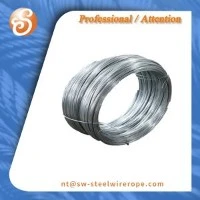
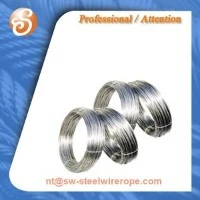
If you’ve ever stared at a winch and thought, “Wait, is this wire rope even gonna work here?”—you’re not alone. As a steel wire rope supplier, I talk to guys all the time who grab the first rope they see off the shelf, only to end up with something that slips on the winch drum, snaps way too early, or just plain doesn’t fit. Adapting a wire rope to a specific winch isn’t rocket science, but skip the small details and you’re looking at downtime, safety risks, or even broken gear. Let’s break this down like we’re chatting over a coffee, no jargon overload.
First things first: what kind of winch are we working with? Winches aren’t one-size-fits-all. A winch for a garage door is totally different from one on a construction crane or a fishing boat. I’ve had a customer come to me last month with a winch for a small utility trailer, insisting he needed a “heavy-duty” rope—turns out he just grabbed something way too thick, and it kept slipping on the drum because it couldn’t wrap tightly. Let’s start with the basics of matching your rope to your winch, step by step.
1. Figure Out the Winch’s Drum Specs (This Is Non-Negotiable)
The drum is where your wire rope lives when it’s not in use, and it’s the biggest make-or-break factor. If the rope is too thick for the drum, it won’t wrap around tightly—so when you pull heavy loads, it’ll spool unevenly, kink, or even snap. Too thin, and it’ll slip, which is dangerous for lifting or towing.
The key numbers here are the drum’s minimum diameter. That’s the smallest circle the drum can make without crushing the rope. Most winch manuals list this, but if you don’t have the manual, measure it yourself (just be careful around any moving parts!). The general rule of thumb from wire rope experts is that the drum diameter should be at least 20 times the rope’s diameter. Yeah, that’s a quick way to check. For example, if your drum is 8 inches across, your rope shouldn’t be thicker than 0.4 inches (or 10mm) max.
Wait, and don’t forget the number of layers you’re gonna spool. If your winch has a deep drum that can fit 5 layers, your rope needs to handle the friction from rubbing against other layers. That’s why galvanized rope is often a good call here—it’s coated to resist wear from repeated rubbing. A lot of my construction clients go for the 6X37 Galvanized Steel Wire Rope With Durable Carbon Steel because it’s tough, holds up to spooling multiple layers, and has that zinc coating to prevent rust on job sites.
2. Load Capacity: Don’t Guess, Calculate It
Next up—how heavy is the stuff you’re pulling or lifting? I see so many people just go for the biggest load number they can find, but that’s a mistake. Every wire rope has a breaking strength, which is the maximum load it can hold before snapping. You never want to use the full breaking strength, though—industry standard is to use only 1/3 of that for regular use, and even less for dynamic loads (like if you’re towing something that jolts, or lifting and lowering repeatedly).
So let’s do a quick example: if you’re towing a 5,000 lb ATV, you need a rope with a breaking strength of at least 15,000 lb (5k x 3). That makes sense, right? But if you get a rope with a lower breaking strength, it’s gonna fail. Different rope constructions handle load differently too. For example, 6x19S ropes are made for flexible, heavy-duty use, so they’re great for winches on drilling equipment. I’ve got a 1200m roll of the 6x19S+IWRC Galvanized Steel Wire Rope for Petroleum Drilling 1200m that’s perfect for that—its core is fiber or wire (IWRC means independent wire rope core, which is extra strong) so it can take the constant pull of drilling without stretching too much.
3. Winch Type Matters Too: Hand Crank vs. Electric vs. Hydraulic
Not all winches are the same, so your rope needs to match how the winch works. Hand-cranked winches for trailers or small boats are way lower speed, so they don’t need as flexible a rope. They also don’t have a lot of force behind them, so a lighter rope works. Electric winches for trucks or off-road rigs are high-torque, high-speed—so they need a rope that’s flexible enough to spool fast without kinking, but strong enough to handle that sudden pull when you’re stuck in mud.
Hydraulic winches are even more powerful, often used on large construction or mining equipment, so they need a heavy-duty, durable rope. If you’re working on an elevator, though? That’s a whole different winch type. Elevator winches run constantly, smoothly, and need a rope that’s flexible and uniform to wear evenly. The 6x19W+FC Elevator Wire Rope is built exactly for that—its construction is smooth, no sharp edges, so it doesn’t wear on the elevator’s pulleys or the rope itself, and it’s durable enough for daily use by hundreds of people.
4. Environment: Where’s This Winch Gonna Live?
This is one I almost missed early on, but it’s huge. If your winch is outside, in the rain, mud, saltwater, or snow—your rope needs to handle that. Galvanized ropes are coated in zinc to resist rust, so they’re perfect for outdoor, marine, or job site use. If you’re working in a super harsh, corrosive place (like a chemical plant or a saltwater dock), you might even want an extra-heavy galvanized rope. I’ve had a lot of marina customers pick up the Galvanized Wire Rope 500m Heavy-Duty Steel For Sale because it’s long enough for big boat winches and holds up to constant salt exposure.
If your winch is inside, in a dry, controlled environment (like a warehouse or a factory for lifting goods), you might not need galvanized—just a regular steel rope, but still matching the drum and load specs. Oh, and if you need something custom for a specific small winch, like a hardware shop use? We can tweak lengths and constructions, like our Customize Steel Wire Rope For Hardware Shop 6x7+FC Soft Coil 20M—perfect for small winches that pull garage doors, workshop lifts, or small equipment.
5. Don’t Ignore End Fittings: How You Attach the Rope to the Winch
Wait, this is another big one! Even if you get the right rope, if the end fitting doesn’t work with your winch’s anchor, you’re gonna have problems. Most winches have a spot where you clamp or tie the rope, so you need a rope that fits that connection. Some ropes come pre-spliced, some come with thimbles, some you can just clamp. Just make sure the fitting is rated for the same breaking strength as the rope—no use having a rope that can hold 10k lb if your clip is only rated for 5k lb.


Also, when you install the rope, make sure you spool it evenly on the drum. I’ve seen people jam the rope on one side of the drum, which causes kinks and breaks way faster. Take your time, lay each layer evenly, and don’t let the rope twist as you pull it out. Twists in wire rope are the number one cause of failure—they weaken the structure and make the rope snap under load.
A Quick Check List to Make Sure You Got It Right
Let’s wrap this up with a quick run-down you can grab next time you’re picking a rope for your winch:
- Measure your winch drum diameter → pick a rope that’s at least 1/20th that size (no thinner, no thicker)
- Calculate your load → use rope breaking strength equal to 3x your max working load
- Match rope construction to your winch type (drilling, elevator, trailer, etc.)
- Factor in where you’re using it (outdoor = galvanized, dry = whatever works)
- Make sure end fittings match your winch’s anchor
Wrapping It Up: Got Questions? Hit Me Up!
At the end of the day, adapting a wire rope to your winch is about matching the specs, not just grabbing something that looks tough. I’ve been in this business for years, and I’ve seen every mistake from too-thin ropes snapping mid-tow to wrong construction causing elevator winch failures. That’s why I make sure every customer gets the right rope for their exact setup, not just the cheapest one off the shelf.
If you’re not sure what you need, just send over your winch model, the max load you’re working with, and where you’ll be using it—we can help you pick the right rope, even custom lengths if you need ’em. No confusing sales pitches, just straight talk and quality wire rope that works.
References
- Wire Rope Industry Standards: Load Capacity and Drum Diameter Guidelines. Wire Rope Technical Board (WRTB), 2022.
- Galvanized Steel Wire Rope Corrosion Resistance Properties. American Iron and Steel Institute (AISI), 2021.
- Winch Drum Spooling and Wire Rope Installation Best Practices. Off-West Equipment Association (OWEA), 2023.
- Elevator Wire Rope Construction and Performance Specifications. National Elevator Industry, Inc. (NEII), 2022.